Affiliate Disclosure: This article contains affiliate links. If you sign up for a product through one of our links, we may earn a small commission at no extra cost to you. We only recommend cards and services we’ve personally used or thoroughly researched. Our opinions are our own.
Introduction: Why Your Choice of Travel Money Card Actually Matters in Japan
Let me paint you a picture. You’ve just landed at Narita or Haneda, you’re jet-lagged, slightly overwhelmed by the signs, and you need cash. You slide your Aussie bank card into a 7-Eleven ATM, and — surprise — you’re hit with a $5 ATM fee, a 3% currency conversion margin, and an exchange rate that makes you wince. On a two-week trip, those sneaky charges can easily chew through $200 or more.
I’ve lived in Japan for over a decade, and I’ve watched countless Aussie friends and visitors burn money on terrible exchange rates and hidden fees. The good news? In 2026, there are some genuinely excellent travel money cards that will save you a small fortune — if you pick the right one.
Japan is a fascinating mix of old and new when it comes to payments. While cashless payments (especially via IC cards like Suica and contactless) have exploded in recent years, cash is still king in many situations. Smaller restaurants, temples, shrines, rural areas, traditional ryokans, and even some mid-range restaurants are cash-only. You absolutely need a card that handles both ATM withdrawals in yen AND card payments without gouging you on every transaction.
This guide breaks down the best travel money cards for Japan available to Australians in 2026. I’ve compared fees, exchange rates, ATM access, and real-world usability based on years of on-the-ground experience. If you’re still in the planning stages, check out our moving to Japan checklist for a comprehensive overview of everything you need to sort before you go.
Quick Comparison: Top Travel Money Cards for Japan (2026)
| Card | FX Fee (Card Payments) | ATM Fee in Japan | Exchange Rate | Best For |
|---|---|---|---|---|
| Wise Multi-Currency Card | 0.4–0.6% | Free up to $350/month | Mid-market rate | Best overall |
| Revolut | 0% (up to $1,500/month on Standard) | Free up to $350/month | Mid-market rate (weekday) | Budget-conscious travellers |
| ING Orange Everyday | 0% | Free (conditions apply) | Visa rate | People who want a real bank |
| Up Bank | 0% | Varies | Mastercard rate | Tech-savvy travellers |
| Travelex Money Card | ~5.5% margin | $3.50 AUD per withdrawal | Travelex rate (poor) | Avoid if possible |
1. Wise Multi-Currency Card — Best Overall for Japan
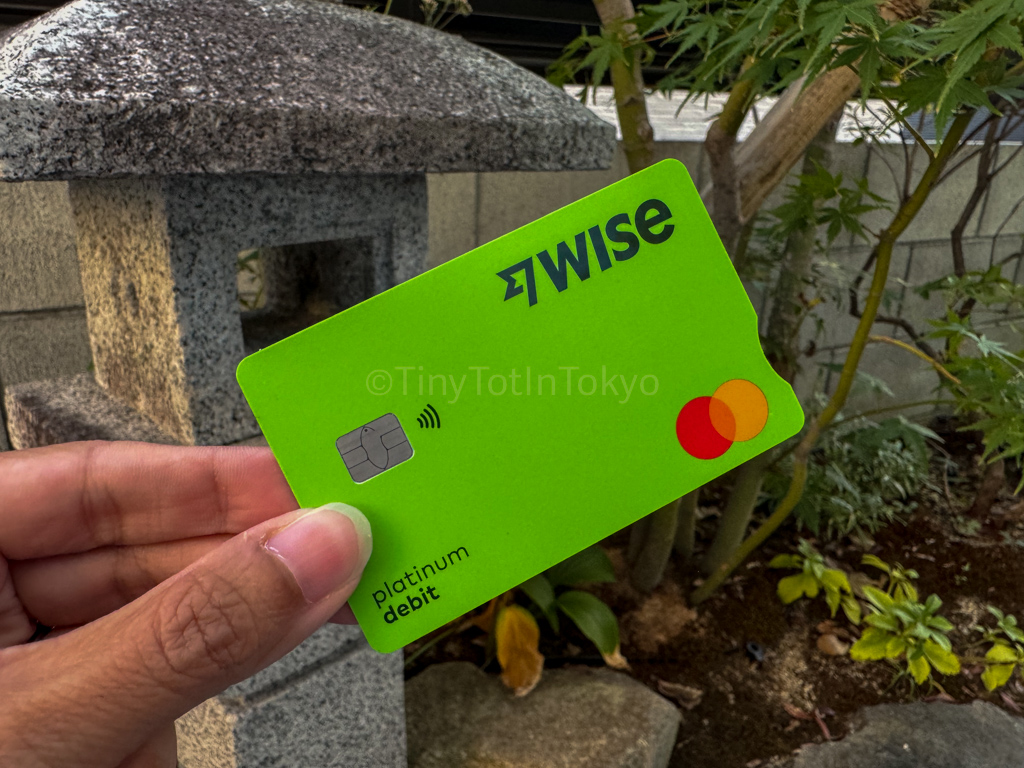
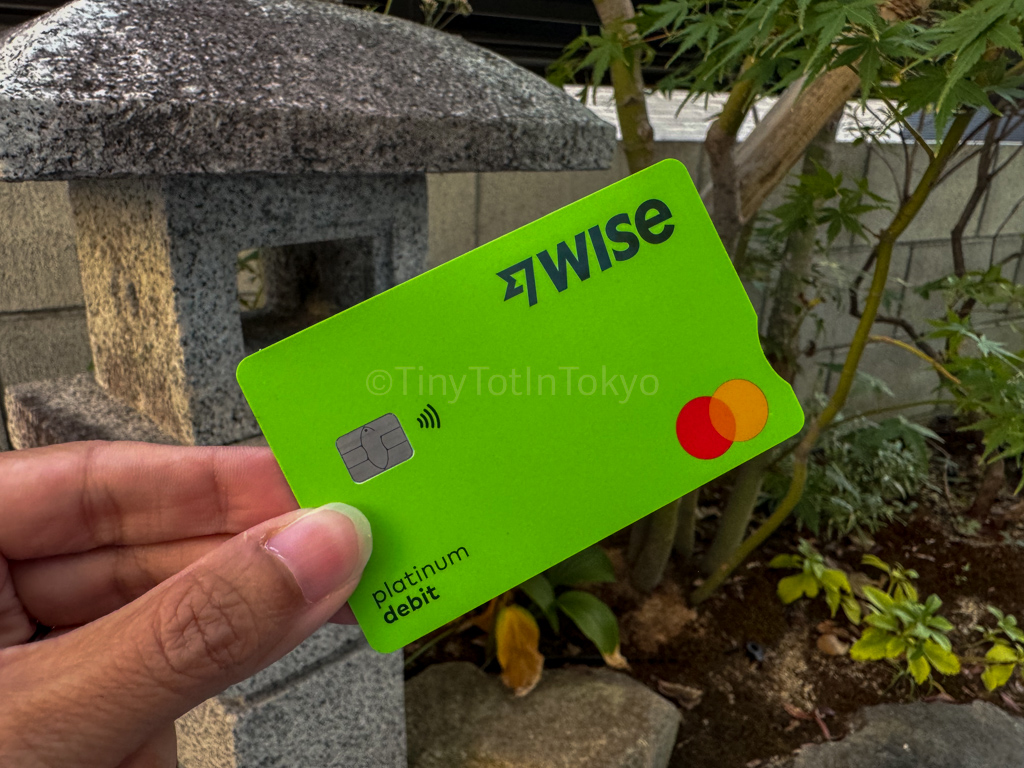
If I could only recommend one card for Aussies heading to Japan, it’s Wise (formerly TransferWise). I’ve been using Wise for years — both as an expat receiving money from Australia and when friends visit and need a hassle-free way to spend in yen.
Here’s what makes Wise special: it uses the real mid-market exchange rate. That’s the rate you see on Google or XE.com — no markup, no hidden margin. You pay a small transparent conversion fee (typically 0.4–0.6% for AUD to JPY), and that’s it. Compare that to most Australian banks, which slap on a 2.5–3% margin on top of the Visa/Mastercard rate.
The Wise card works beautifully at Japanese ATMs — particularly at 7-Eleven (Seven Bank) and Japan Post Bank ATMs, which are the most foreigner-friendly machines in the country. You get free withdrawals up to about $350 AUD per month (then a small fee applies), which is plenty for covering cash-only spots during a typical trip.
You can hold and convert JPY in advance, locking in a rate you’re happy with. This is brilliant if the AUD/JPY rate is favorable weeks before your trip — just convert and hold yen in your Wise account.
Pros:
- Real mid-market exchange rate with tiny, transparent fees
- Hold 50+ currencies including JPY
- Free ATM withdrawals up to a monthly limit
- Excellent app with instant notifications and spending analytics
- Widely accepted in Japan (Visa network)
- Can receive money from Australian bank accounts via PayID
Cons:
- Not a full bank account — no interest on AUD balances (though Wise does offer interest in some regions)
- ATM fees kick in after the free monthly limit
- $9 AUD one-time card fee
- Some very old Japanese payment terminals may not accept it (rare in 2026)
For a deeper look at how Wise works for Japan-based finances, read our full Wise Japan review.
2. Revolut — Best for Fee-Free Spending (With Caveats)
Revolut has been making serious waves in Australia, and for good reason. On the Standard (free) plan, you get $0 foreign exchange fees on up to $1,500 AUD per month in card spending at the interbank rate. That’s incredibly generous.
For Japan specifically, Revolut works well for card payments at larger stores, hotels, and chain restaurants. You also get free ATM withdrawals up to $350/month, similar to Wise.
The catch? Revolut applies a weekend markup of 0.5–1% on currency conversions. Since Japan is a Saturday-activity-heavy destination (markets, day trips, shopping), this can catch you off guard. The workaround is simple: convert your AUD to JPY within the app during the week, and you’ll avoid the weekend surcharge entirely.
Pros:
- Zero FX fees on card payments up to $1,500/month (Standard plan)
- Interbank exchange rate on weekdays
- Sleek app with budgeting tools and instant notifications
- Virtual cards for online purchases
- Free ATM withdrawals up to a monthly limit
Cons:
- Weekend exchange rate markup (0.5–1%) if you don’t pre-convert
- Limits on free FX — fees apply after $1,500/month on Standard
- Customer support can be slow compared to traditional banks
- Less established in Australia than Wise
3. ING Orange Everyday — Best Traditional Bank Option
If you prefer the security and familiarity of a proper Australian bank, the ING Orange Everyday account is hard to beat for travel. ING charges zero international transaction fees and zero international ATM fees — as long as you meet their monthly conditions (deposit $1,000+ and make 5 settled card purchases per month).
The exchange rate you get is the Visa wholesale rate, which is very competitive — typically within 0.2–0.5% of the mid-market rate. Not quite as sharp as Wise’s mid-market rate, but close enough that many people prefer the simplicity.
In Japan, the ING Visa debit card works at 7-Eleven ATMs and most card terminals without issues. The big advantage is that there’s no monthly cap on fee-free withdrawals or spending — unlike Wise and Revolut, which impose limits.
Pros:
- $0 international transaction fees
- $0 international ATM fees (with conditions met)
- No monthly caps on fee-free usage
- Backed by a fully regulated Australian bank with deposit guarantee
- Easy to set up alongside your existing Aussie bank
Cons:
- Must meet monthly conditions (5 transactions + $1,000 deposit) or fees apply
- Exchange rate is Visa rate, not mid-market — slightly less favorable
- Can’t hold or pre-convert JPY
- App and user experience not as polished as Wise or Revolut
4. Up Bank — Best for Tech-Savvy Travellers
Up Bank is an Australian neobank that charges zero international transaction fees on card payments. The exchange rate used is the Mastercard rate, which is generally very competitive.
Up’s app is genuinely one of the best banking apps in Australia — real-time notifications, spending insights, automated savings, and a clean interface that makes tracking your Japan spending a breeze. If you’re the type who likes to see exactly where every yen went, Up is your card.
The downside for Japan? ATM withdrawals overseas may incur fees from the ATM operator (Seven Bank charges around ¥110 per withdrawal for foreign cards). Up doesn’t charge their own ATM fee, but they also don’t reimburse the operator’s fee like ING does. For a cash-heavy country like Japan, this adds up.
Pros:
- $0 international transaction fees on card payments
- Mastercard exchange rate (very competitive)
- Outstanding app experience
- Australian ADI-regulated bank (deposits guaranteed up to $250k)
- No monthly conditions to meet
Cons:
- ATM operator fees in Japan are not reimbursed
- Can’t hold or pre-convert foreign currency
- Mastercard acceptance slightly less universal than Visa in rural Japan
5. Travelex Money Card — Why I’d Skip It
I’m including the Travelex Money Card because it’s heavily marketed at Australian airports and travel agencies, so many people consider it. Honestly? It’s one of the worst options for Japan.
Travelex uses its own exchange rates, which typically carry a 4–5.5% margin over the mid-market rate. That means on a $5,000 AUD trip, you could lose $250–$275 just on the exchange rate alone — before you even factor in their $3.50 ATM withdrawal fee and potential reload fees.
The only scenario where a Travelex card makes sense is if you’ve already bought one and loaded it at a favorable rate during a promotion. Otherwise, any of the four options above will save you significantly more money.
Pros:
- Available at airports and travel agencies for last-minute travellers
- Can lock in a rate in advance
Cons:
- Terrible exchange rates (4–5.5% margin)
- $3.50 ATM withdrawal fee
- Reload fees may apply
- Outdated app and user experience
- Far more expensive than Wise, Revolut, ING, or Up
Buying Guide: How to Choose the Right Travel Money Card for Japan
Understand Japan’s Payment Landscape in 2026
Japan has come a long way with cashless payments. Major cities like Tokyo, Osaka, and Kyoto now accept cards at most mid-to-large retailers, convenience stores, department stores, and chain restaurants. Contactless (tap-and-go) via Visa and Mastercard is widely supported.
However, you will still need cash. Smaller izakayas, ramen shops, street food stalls, temples and shrines (for entry fees and charms), local buses in rural areas, and many traditional accommodations are cash-only. Budget for at least 30–40% of your spending in cash, even in 2026.
Key Factors to Compare
- Exchange rate transparency: Cards using the mid-market rate (Wise, Revolut) will almost always beat those using Visa/Mastercard rates, which in turn crush Travelex-style rates.
- ATM fees: You’ll be hitting ATMs regularly. Seven Bank (7-Eleven) ATMs are your best friend — they accept virtually all foreign cards, have English menus, and are everywhere. Look for cards that offer free or low-cost withdrawals.
- Monthly limits: Wise and Revolut have caps on fee-free ATM withdrawals and (for Revolut) FX spending. If you’re a big spender, ING’s unlimited fee-free model might suit you better.
- Currency pre-conversion: The ability to convert AUD to JPY in advance (Wise, Revolut) lets you lock in rates and avoid weekend markups.
- Card network: Visa is marginally more accepted than Mastercard in Japan, but both work at the vast majority of places that accept cards. If heading deep into rural Japan, carry cash regardless.
- Backup options: Always bring at least two different cards from two different providers. ATMs can be finicky, cards can get blocked, and having a backup prevents a stressful situation.
My Personal Strategy
After years of helping Aussie friends prepare for Japan trips, here’s the combination I recommend:
- Wise as your primary card — use it for both card payments and ATM withdrawals. Pre-convert some AUD to JPY before your trip.
- ING Orange Everyday as your backup — meets the “different provider, different network” rule if Wise (Visa) has issues, and offers unlimited fee-free usage.
- A small amount of cash (¥20,000–30,000) exchanged before you leave — just enough for the first day or two in case of any card issues at arrival.
This combo covers you in virtually every scenario. Don’t forget to also sort out a SIM card or eSIM for Japan so you can actually access your banking apps and manage your money on the go.
Important ATM Tips for Japan
- Always choose “Withdrawal in JPY” and decline Dynamic Currency Conversion (DCC). If the ATM offers to charge you in AUD, say NO. This is a trap — the ATM operator’s exchange rate is always worse than your card’s rate.
- Seven Bank ATMs (inside 7-Eleven stores) are the most reliable for foreign cards. They’re open roughly 24 hours in cities.
- Japan Post Bank ATMs are another reliable option, especially in rural areas where 7-Elevens are scarcer.
- Avoid ATMs inside Japanese megabanks (MUFG, SMBC, Mizuho) — they often don’t accept foreign cards.
- Withdraw larger amounts less frequently to minimize per-transaction fees (if applicable).
Frequently Asked Questions
Can I use my regular Australian bank card in Japan?
Technically, yes — most Australian Visa and Mastercard debit cards will work at 7-Eleven ATMs and many card terminals in Japan. However, your regular bank likely charges a 2–3% foreign transaction fee PLUS a $5 international ATM fee. Over a two-week trip, this easily adds up to $150–300 in unnecessary fees. A dedicated travel card like Wise or the ING Orange Everyday eliminates these costs almost entirely.
Is Japan still a cash-heavy country in 2026?
Japan has made massive progress toward cashless payments, especially since the push around the 2020 Olympics era. In major cities, you can get by with cards and IC cards (Suica/Pasmo) for most purchases. However, cash is still essential for many smaller businesses, rural areas, temple visits, festivals, and some restaurants. I’d recommend carrying at least ¥10,000–20,000 in cash at all times as a buffer.
Should I exchange Australian dollars to yen before I leave, or withdraw in Japan?
Generally, you’ll get a much better rate by withdrawing yen from ATMs in Japan using a low-fee card like Wise or ING, rather than exchanging cash at Australian airports or currency exchange shops. The exception is if you can find a really good promotional rate at a currency exchange — but this is rare. I suggest bringing a small amount of yen for the first day (exchange at your Australian bank branch beforehand, not the airport), then relying on ATM withdrawals for the rest of your trip.
Do I need to notify my bank before travelling to Japan?
Some banks still require travel notifications, while others (like Wise, Revolut, and Up) don’t. ING recommends setting a travel notification through their app. Even if it’s not strictly required, it’s worth doing to prevent your card being flagged for suspicious activity and blocked at a Japanese ATM — especially at 11pm when your bank’s support line has a 45-minute wait.
What about using Apple Pay or Google Pay in Japan?
Apple Pay and Google Pay work at an increasing number of locations in Japan, particularly convenience stores, major retailers, and train stations. If your travel money card supports these (Wise and Revolut both do), you can tap to pay with your phone. This is incredibly convenient, but don’t rely on it exclusively — many places that accept cards still require a physical card insertion or a cash payment. And of course, your phone needs battery and data to function, so having a physical card as backup is non-negotiable.
Conclusion: The Best Travel Money Card for Japan from Australia in 2026
After years of living in Japan and helping dozens of Australians navigate the financial side of their trips, my top recommendation is clear: the Wise Multi-Currency Card is the best all-round travel money card for Japan from Australia in 2026. Its mid-market exchange rate, transparent fees, JPY holding capability, and seamless ATM experience at Japanese 7-Elevens make it the smartest choice for most travellers.
If you prefer a traditional bank with no monthly limits, ING Orange Everyday is an excellent alternative. And Revolut is a strong contender if you’re disciplined about pre-converting currency on weekdays to avoid the weekend markup.
Whatever you do, avoid relying solely on your regular Australian bank card or airport currency exchange cards like Travelex. The savings from using a proper travel money card will easily cover several meals of incredible ramen, an extra night at a ryokan, or that gorgeous piece of pottery you’ve been eyeing in Kyoto.
Set up your cards at least 2–3 weeks before your trip to allow time for delivery and verification. Load them up, test a small transaction, and you’ll land in Japan confident that your money is working as hard as you are.
Planning a longer stay or a permanent move? Our moving to Japan checklist covers everything from visas to finding an apartment. Safe travels, and enjoy every moment in Japan — it’s worth every yen.