admin – Travel Move Kit

Author: admin

  • Japan Pension for Foreigners: The Complete 2026 Guide to Nenkin, Refunds & Your Rights

    Affiliate Disclosure: This article contains affiliate links. If you purchase products or services through these links, I may earn a small commission at no extra cost to you. I only recommend tools and resources I’ve personally used or thoroughly vetted during my years living in Japan. Thank you for supporting this site!

    Introduction: Why You Need to Care About Japan’s Pension System

    Let me guess — you just moved to Japan, you’re stoked about your new life here, and then someone at your ward office hands you a pension booklet and says you need to start paying into the system. Your immediate reaction? “Wait, I’m not retiring here. Why am I paying into a Japanese pension?”

    I get it. When I first arrived in Japan, the pension system was the last thing on my mind. I was busy figuring out how to read my gas bill and which trash goes out on which day. But here’s the thing — the Japan pension system (called nenkin / 年金) isn’t optional for foreigners. It’s mandatory. And ignoring it can come back to bite you in ways you don’t expect.

    The good news? The system actually has some real benefits for foreigners, including a lump-sum withdrawal payment when you leave Japan. If you understand how it works, you can either build toward a real retirement benefit or at least get a significant chunk of money back when you go home.

    In this 2026 guide, I’m breaking down everything you need to know about the Japan pension for foreigners — the types of pension, how much you’ll pay, how to get money back, and the tools that’ll make managing your finances in Japan way easier. Let’s dive in.

    Understanding the Japanese Pension System: The Two Main Types

    Japan’s public pension system has two tiers, and which one you’re enrolled in depends on your employment situation:

    1. National Pension (Kokumin Nenkin / 国民年金)

    This is the basic pension that covers everyone in Japan aged 20-59, regardless of nationality. If you’re self-employed, a freelancer, a student, or unemployed, this is your plan. In 2026, the monthly contribution is approximately ¥16,980 (this amount adjusts slightly each fiscal year).

    Pros:

    • Fixed monthly payment — easy to budget for
    • Qualifies for lump-sum withdrawal when leaving Japan
    • Exemptions available if your income is low
    • Covered periods may count toward pension eligibility in your home country (if a social security agreement exists)

    Cons:

    • The full pension benefit is modest (around ¥816,000/year for 40 years of contributions)
    • You must actively enroll and pay at your ward office or via bank transfer
    • Late payments can result in penalties and even asset seizure in extreme cases

    2. Employees’ Pension Insurance (Kosei Nenkin / 厚生年金)

    If you work for a Japanese company (or a company with a Japanese entity), you’ll be enrolled in Kosei Nenkin. This is the earnings-related pension that sits on top of the National Pension. Your employer handles enrollment and splits the cost 50/50 with you.

    Pros:

    • Higher benefits than National Pension alone
    • Employer pays half — your effective contribution rate is about 9.15% of your salary
    • Automatically deducted from your paycheck (no manual payments)
    • Larger lump-sum withdrawal amount when leaving Japan

    Cons:

    • Contributions can feel substantial — especially on higher salaries
    • You have no choice in enrollment if your employer qualifies
    • More complex to calculate exact refund amounts

    How Much Will You Actually Pay? 2026 Contribution Rates

    Let’s talk numbers, because that’s what really matters when you’re budgeting your life in Japan.

    National Pension (Kokumin Nenkin): ~¥16,980/month (flat rate for everyone)

    Employees’ Pension (Kosei Nenkin): 18.3% of your standard monthly remuneration — split equally between you and your employer. So you pay 9.15% of your gross salary. For example, if you earn ¥300,000/month, your share is about ¥27,450/month.

    Here’s a quick reference table:

    Monthly Salary (Gross) Your Monthly Pension Payment
    ¥200,000 ~¥18,300
    ¥300,000 ~¥27,450
    ¥400,000 ~¥36,600
    ¥500,000 ~¥45,750
    ¥650,000 (cap) ~¥59,475

    There’s a cap on the salary used for calculation (the standard monthly remuneration maxes out at ¥650,000), so even high earners won’t pay beyond that threshold.

    The Lump-Sum Withdrawal Payment: Getting Your Money Back

    This is the section most foreigners care about the most, so let me be thorough.

    If you leave Japan and don’t plan to return, you can claim a lump-sum withdrawal payment (脱退一時金 / dattai ichijikin) for the pension contributions you made. Here’s how it works in 2026:

    Eligibility Requirements

    • You are not a Japanese national
    • You contributed to the pension system for at least 6 months
    • You do not have the right to receive a Japanese pension (i.e., you haven’t contributed for 10+ years, or you haven’t reached the qualification period via a social security agreement)
    • You no longer have an address in Japan
    • You apply within 2 years of leaving Japan

    How Much Will You Get Back?

    As of 2026, the lump-sum withdrawal covers contributions for up to 60 months (5 years) of coverage. This was increased from 36 months in 2021, which was a huge improvement for long-term residents.

    For National Pension, the refund amount is calculated based on a formula using the average contribution amount and the number of months. For 60 months of contributions in 2026, you’re looking at roughly ¥700,000-¥850,000 depending on the exact rates for each fiscal year.

    For Employees’ Pension, the amount depends on your salary. Someone earning ¥300,000/month for 5 years could receive approximately ¥1,200,000-¥1,500,000. Not pocket change!

    Important caveat: A 20.42% income tax is withheld from the lump-sum payment. However, you can claim this tax back by filing a tax return through a tax representative in Japan. I’ll cover that below.

    How to Apply for the Lump-Sum Withdrawal

    1. Before leaving Japan: Designate a tax representative (納税管理人) at your local tax office. This person will handle your tax refund claim after you leave. It can be a friend, former employer, or a professional service.
    2. Leave Japan: Make sure to submit your moving-out notification (転出届) at your ward office.
    3. After leaving Japan: Submit the Lump-Sum Withdrawal Claim Form to the Japan Pension Service. You can download it from the JPS website or request it by mail.
    4. Wait: Processing typically takes 3-6 months. The payment will be sent to your overseas bank account.
    5. Claim your tax refund: Your tax representative files an amended return to reclaim the 20.42% withholding tax.

    Pro tip: Having a reliable way to receive international transfers is crucial here. I strongly recommend setting up a Wise (formerly TransferWise) account before you leave Japan — the exchange rates are far better than traditional banks, and you’ll save a significant amount on the transfer fees when your refund arrives.

    Social Security Agreements: The Game-Changer Many Foreigners Miss

    Here’s something that could be worth way more than the lump-sum withdrawal — Japan has social security agreements (SSAs) with over 20 countries, including the United States, United Kingdom, Germany, France, Australia, Canada, South Korea, and many others.

    These agreements do two critical things:

    1. Prevent double coverage: If you’re sent to Japan by an employer in your home country for a limited period (usually up to 5 years), you may be exempt from the Japanese pension system entirely.
    2. Totalize contribution periods: Your years of pension contributions in Japan can be combined with your contributions at home to meet the minimum qualification periods in either country.

    Why does this matter? If you’ve contributed to Japan’s pension for, say, 7 years, and you have 15 years of contributions in the US, those periods are combined. You’d qualify for a (proportionally reduced) pension from both countries — which over a lifetime could be worth far more than the lump-sum withdrawal.

    Critical decision: If you claim the lump-sum withdrawal, those contribution years are erased. You can’t use them for totalization anymore. So if you’re from a country with an SSA, do the math carefully before filing for the lump-sum payment.

    Essential Financial Tools for Managing Your Japan Finances

    Dealing with pensions, taxes, and international money transfers means you need the right financial tools. Here are my top recommendations based on years of personal experience:

    Wise Multi-Currency Account

    For receiving your pension refund overseas, converting yen, and managing money between Japan and your home country, Wise is absolutely essential. You get the real mid-market exchange rate with transparent, low fees. I’ve used it for every major financial transaction since I moved to Japan.

    A Good Japanese-English Tax Guide

    Understanding your tax obligations in Japan — especially around pension contributions, deductions, and the tax refund process — is much easier with a solid reference. I recommend picking up an English-language tax guide for Japan:

    Browse Japan Tax Guides on Amazon →

    Document Organization

    You’ll need to keep your nenkin booklet (年金手帳 — now replaced by a basic pension number notification letter), pay stubs showing pension deductions, and your withdrawal application documents organized. A good document organizer is a lifesaver:

    Browse Document Organizers on Amazon →

    Japanese Language Learning Resources

    Navigating pension offices, ward offices, and government paperwork is infinitely easier with even basic Japanese. The pension office staff are generally helpful, but most forms and correspondence are in Japanese. Investing in language learning pays dividends across every aspect of life in Japan:

    Check out our guide to the best language apps for Japanese →

    Browse Japanese Language Textbooks on Amazon →

    Pension Exemptions and Reductions: What If You Can’t Afford to Pay?

    If you’re a student, between jobs, or earning a low income, you may qualify for pension payment exemptions or reductions. This is specifically for the National Pension — Employees’ Pension is always deducted automatically.

    Available categories include:

    • Full exemption (全額免除) — no payment required
    • 3/4 exemption — pay only 1/4 of the standard amount
    • Half exemption — pay 50%
    • 1/4 exemption — pay 75%
    • Payment postponement (納付猶予) — for those under 50 with low income
    • Student exemption (学生納付特例) — for enrolled students

    These exemption periods still count toward your qualification period for receiving a pension (or for totalization under an SSA), though the benefit amount is reduced proportionally. Apply at your local ward office — bring your residence card and any proof of income or student status.

    Important: Don’t just ignore the payment notices. Unpaid pension contributions without an approved exemption can lead to increasingly aggressive collection efforts, including wage garnishment. The Japanese government has been cracking down on non-payment, including among foreign residents.

    Step-by-Step: How to Enroll in the Japanese Pension System

    If you’re employed by a Japanese company, your employer handles everything. But if you’re self-employed, freelance, or between jobs, here’s what you need to do:

    1. Visit your local ward/city office (区役所/市役所) within 14 days of registering your address in Japan
    2. Go to the pension counter (国民年金の窓口) and bring your residence card (在留カード)
    3. Fill out the enrollment form — staff will help you, and some offices have English support
    4. Receive your Basic Pension Number — as of 2026, new enrollees receive a notification letter rather than the old blue pension booklet
    5. Set up payment — you can pay via bank transfer, convenience store payment slips, credit card, or direct debit. I recommend direct debit for a small discount and zero hassle
    6. Keep records — save all payment receipts and your pension number. You’ll need them for tax deductions and any future withdrawal claims

    If you’re just getting started with your move to Japan, make sure you’ve checked off all the other essentials too. Our complete moving to Japan checklist covers everything from the moment you land.

    What Happens If You Stay? Qualifying for a Full Japanese Pension

    If you end up falling in love with Japan (it happens more than you’d think), you might actually qualify for a Japanese pension. The minimum contribution period was reduced from 25 years to 10 years in 2017, making it much more achievable for long-term foreign residents.

    With 10 years of contributions, you’d receive a proportionally reduced pension starting at age 65. The full National Pension requires 40 years of contributions for the maximum benefit of approximately ¥816,000 per year. The Employees’ Pension adds an earnings-related component on top of that.

    Combined with totalization from an SSA, some expats find that they can build a meaningful retirement benefit from multiple countries. It’s worth consulting a financial advisor who specializes in international pension planning if you’re in this situation.

    Frequently Asked Questions

    Can I really ignore the Japanese pension and not face consequences?

    Technically, enrollment is mandatory for all residents aged 20-59, and in 2026, enforcement has become stricter. The Japan Pension Service can and does issue demand notices, impose late payment penalties (up to 14.6% annual interest), and in extreme cases, seize assets or garnish wages. For Employees’ Pension, your employer is legally required to enroll you, so there’s no way around it. For National Pension, while enforcement against foreigners has historically been lax, the trend is clearly toward stricter compliance. My advice: pay or apply for an exemption. The lump-sum withdrawal means you’ll get a significant portion back anyway.

    How long does the lump-sum withdrawal payment take to arrive?

    Expect 3 to 6 months from the date the Japan Pension Service receives your completed application. Some people report receiving it faster (around 2-3 months), while others, especially during busy periods, wait longer. The payment is sent via international bank transfer to the account you specify on your application. Make sure your bank details are accurate — errors can add months of delay. Using a Wise borderless account with a Japanese yen balance can be a smart way to receive the funds and convert them at the best rate.

    I’m from a country without a social security agreement with Japan. What are my options?

    If your country doesn’t have an SSA with Japan (check the Japan Pension Service website for the current list in 2026), the lump-sum withdrawal is almost certainly your best option. You won’t benefit from totalization, so contributing for less than 10 years means you’d receive no pension benefit. File for the withdrawal within 2 years of leaving Japan, and don’t forget to appoint a tax representative to reclaim the 20.42% withholding tax. Together, the pension refund plus the tax refund can amount to a surprisingly large sum.

    Can I make voluntary contributions to the Japanese pension from overseas?

    Yes! Japanese nationals and certain foreign nationals who previously lived in Japan can make voluntary contributions (任意加入) to the National Pension while living overseas, as long as they’re between 20 and 65. This is primarily useful if
  • Japan Daily Update — 25 April 2026

    Japan News Digest — Saturday, April 25, 2026
    Here are today’s top stories from Japan Times and GaijinPot, curated for expats and travellers in Japan.

    Inkonbini: Slice-of-life, cozy gaming from Japan’s convenience stores

    A charming new Japanese game celebrates the humble convenience store—a cornerstone of daily life for expats in Japan. The game captures what makes konbini so appealing: they’re welcoming, reliable spaces that feel like a “safe room” in the chaos of urban Japan. Whether you’re new to Japan or a long-time resident, this game offers a nostalgic look at a uniquely Japanese experience.

    Read full story

    Japan’s health minister calls for measles vaccinations

    A measles outbreak is accelerating across Japan, with 299 cases already reported this year—surpassing all of 2025. Expats and travellers should ensure their vaccinations are up to date, especially if visiting crowded areas or planning to stay long-term. Check with your doctor or local health clinic if you’re unsure of your measles immunity status.

    Read full story

    Japan’s space agency to launch H3 rocket on June 10

    JAXA will attempt its first H3 rocket launch since December’s failure, marking an important milestone for Japan’s space programme. If you’re in the Tanegashima region during the launch window, this could be a spectacular viewing opportunity. The event also showcases Japan’s technological ambitions on the global stage.

    Read full story

    Zoom ordered to pay damages for violating Japan firm’s trademark

    A Japanese court ruled that Zoom’s branding infringes on a local company’s trademark, demonstrating Japan’s active enforcement of intellectual property rights. For entrepreneurs and business expats, this ruling highlights the importance of thorough trademark searches before launching products or services in Japan. Japan takes IP violations seriously, and court decisions can be costly.

    Read full story

    Japan’s three megabanks and JBIC to provide ¥250 billion in loans for U.S. projects

    Japan’s major financial institutions are deepening investment ties with the United States, signalling confidence in bilateral economic cooperation. For expats working in finance or international business, this reflects the strength of Japan-U.S. relations and opportunities for cross-border projects. The move also demonstrates how Japanese capital continues to shape global infrastructure.

    Read full story

    China holds live-fire drills in waters near Luzon as Japan joins military exercises in Philippines

    Heightened military activity in the region underscores ongoing geopolitical tensions in East Asia, with Japan actively participating in allied exercises. While these developments are primarily political and military in nature, they reflect the complex regional dynamics that can occasionally affect travel and business operations. Expats should stay informed about regional stability, though such exercises rarely impact daily life in Japan itself.

    Read full story

    Check back tomorrow for the latest Japan updates.


    Compiled daily from Japan Times and GaijinPot. Updated every morning.

  • Sending Money to Japan from Abroad: The Complete Guide for 2026

    Affiliate Disclosure: This article contains affiliate links. If you click through and make a purchase or sign up for a service, we may earn a commission at no additional cost to you. We only recommend services we’ve personally used or thoroughly researched. These commissions help keep TravelMoveKit running so we can continue creating free content for the expat community.

    Introduction: Why Sending Money to Japan Isn’t as Simple as It Should Be

    Let me paint you a picture. You’ve just landed your dream job teaching English in Tokyo, or maybe you’re supporting a spouse who’s already set up in Osaka. Either way, you need to move money from your home country bank account into a Japanese one — and you’re about to discover that your bank wants to charge you $45 in wire fees, offer an exchange rate that’s 3-4% worse than what you see on Google, and take 3-5 business days to complete the transfer.

    I’ve been there. When I first moved to Japan in the mid-2010s, I made the classic mistake of using my American bank for international wire transfers. On a $2,000 transfer, I was losing close to $100 between fees and poor exchange rates. That’s a nice dinner for two at a ryotei — gone, straight into the bank’s pocket.

    The good news? In 2026, we have more options than ever for sending money to Japan from abroad. Fintech companies have completely disrupted the old banking model, and competition has driven costs way down. The bad news? There are now so many options that choosing the right one can feel overwhelming.

    That’s exactly why I wrote this guide. Whether you’re sending a one-time lump sum to set up your new life in Japan, making regular monthly transfers to cover rent, or sending money to family, I’ll walk you through every major option so you can keep more of your hard-earned cash.

    If you’re still in the planning stages, make sure to check out our complete moving to Japan checklist so you don’t miss any critical steps.

    Quick Comparison: Best Ways to Send Money to Japan in 2026

    Before we dive into detailed reviews, here’s a quick snapshot of the top services for sending money to Japan:

    Service Transfer Fee Exchange Rate Markup Speed Best For
    Wise (TransferWise) ~0.4-0.6% Mid-market rate 1-2 business days Overall best value
    Revolut Free (up to limits) 0-1% markup 1-3 business days Multiple currencies
    OFX No transfer fee ~0.5-1% markup 1-3 business days Large transfers ($10K+)
    Remitly $0-3.99 ~1-2% markup Minutes to 3 days Fast small transfers
    PayPal/Xoom $0-4.99 ~2.5-4% markup Minutes to days Convenience (not value)
    Traditional Bank Wire $25-50 ~2-5% markup 3-5 business days When you have no choice

    Our top recommendation for most people? Wise. It’s not even close for the majority of expat use cases. But let’s break down each option in detail so you can decide what works for your specific situation.

    Wise (Formerly TransferWise) — The Gold Standard for Expat Transfers

    If you spend any time in expat communities in Japan — whether on Reddit, Facebook groups, or chatting at your local Hub pub — you’ll hear one name come up over and over again: Wise. There’s a reason for that.

    Wise uses the real mid-market exchange rate (the one you see on Google or XE.com) and charges a small, transparent fee on top. There are no hidden markups baked into the exchange rate, which is where most banks and older services make their real money.

    For a typical $1,000 USD to JPY transfer in 2026, you’ll pay roughly $4-6 in fees and get the actual market exchange rate. Compare that to a bank that might charge $40 in fees AND give you a rate that’s 3% worse — on a $1,000 transfer, that’s an additional $30 hidden cost. You’d pay around $70 total with the bank versus $5 with Wise.

    Wise also offers a multi-currency account with a debit card, which is incredibly useful when you’re straddling two countries. You can hold balances in JPY, USD, EUR, GBP, and dozens of other currencies. I use mine to receive payments in USD and convert to yen when the rate looks favorable.

    For a deeper dive, check out our full Wise Japan review.

    Pros:

    • True mid-market exchange rate with no hidden markup
    • Low, transparent fees clearly shown before you send
    • Fast transfers (usually 1-2 business days to Japanese bank accounts)
    • Multi-currency account and debit card available
    • Excellent mobile app with rate alerts
    • Licensed and regulated in Japan (they have a Tokyo office)
    • Can send to Japanese bank accounts using standard account numbers

    Cons:

    • Not the cheapest for very large transfers ($50K+) — OFX may beat it
    • Verification can take a few days for first-time users
    • Transfer limits exist (though they’re generous for most people)
    • Weekend transfers may experience slight delays

    Revolut — Great for Multi-Currency Expats

    Revolut has been expanding aggressively in the Asia-Pacific region, and by 2026 it’s become a serious contender for Japan-bound transfers. The free tier allows you to exchange a certain amount per month at the interbank rate with no fees, which is hard to beat if your transfers fall within those limits.

    Where Revolut really shines is if you’re juggling multiple currencies. Maybe you earn in USD but also do freelance work paid in EUR, and you need to send JPY to your Japanese landlord. Revolut handles all of this from a single app.

    The catch? Once you exceed the free exchange limit on the standard plan, a markup of around 0.5-1% kicks in. Weekend transfers also carry a higher markup because forex markets are closed. And Revolut’s customer service, while improved, still isn’t quite at Wise’s level.

    Pros:

    • Free exchanges up to monthly limits on the basic plan
    • Sleek app with instant currency conversion
    • Virtual and physical debit cards
    • Good for holding and managing multiple currencies
    • Crypto and stock trading features if you’re into that

    Cons:

    • Weekend exchange rate markups (0.5-1% surcharge)
    • Free limits can be restrictive for large or frequent transfers
    • Customer support can be slow during peak times
    • Premium plans required to unlock the best features
    • Not as widely known/trusted in Japan as Wise

    OFX — The Smart Choice for Large Transfers

    Moving your life savings to Japan? Buying property? Transferring a severance package? If you’re sending $10,000 or more, OFX deserves serious consideration.

    OFX doesn’t charge any transfer fees at all. Instead, they make their money on a small spread added to the exchange rate — but for large amounts, their rates are often more competitive than Wise because they can negotiate better deals at volume. They also assign you a personal dealer for large transfers, which means you can actually call someone and discuss rate strategies, lock in forward contracts, or set up limit orders.

    I used OFX when I transferred a substantial sum to make a key money payment (the notorious Japanese rental deposit system). The rate I got was genuinely better than what Wise was offering at the time for that amount, and having a human being to talk to during such a stressful financial moment was reassuring.

    Pros:

    • No transfer fees
    • Competitive rates for large amounts
    • Personal dealers for hands-on support
    • Forward contracts and limit orders available
    • Great for business transfers and property purchases

    Cons:

    • Minimum transfer amount (usually $1,000)
    • Not as competitive for small transfers
    • No multi-currency debit card
    • Interface isn’t as modern as Wise or Revolut
    • Account setup requires more verification

    Remitly — Speed When You Need It

    Sometimes you need money in Japan now. Maybe your rent is due tomorrow and you forgot to transfer, or your partner needs emergency cash. Remitly’s express option can deliver money in minutes to certain Japanese bank accounts or cash pickup locations.

    The tradeoff is cost. Remitly’s exchange rates include a markup that’s higher than Wise or OFX, and express transfers cost more than economy ones. But for the occasional urgent transfer, the speed premium is worth it.

    Remitly also has a very user-friendly app that’s great for people who aren’t comfortable with financial technology. The interface is clean, the process is straightforward, and their customer support is available in multiple languages.

    Pros:

    • Express delivery in minutes for urgent transfers
    • Very intuitive app and website
    • First transfer often comes with a promotional rate
    • Good customer support
    • Cash pickup option available in Japan

    Cons:

    • Exchange rate markups higher than Wise/OFX
    • Express transfers carry premium fees
    • Not ideal for regular large transfers
    • Economy option is slower (3-5 days)

    Traditional Bank Wire Transfers — The Expensive Dinosaur

    I include this section because some people still default to their bank, and in rare cases, it’s actually necessary. Certain Japanese real estate transactions, visa-related financial proofs, or institutional payments may require a formal SWIFT bank wire.

    But let me be blunt: for regular money transfers to Japan, using your bank is almost always the worst option. You’ll pay $25-50 in outgoing wire fees, the intermediary bank might take another $15-25, your Japanese bank may charge ¥2,500-4,000 to receive it, and the exchange rate will be 2-5% worse than the mid-market rate.

    On a $5,000 transfer, you could easily lose $250-350 in total costs. With Wise, that same transfer would cost around $25-30. The math speaks for itself.

    How to Send Money to Japan: Step-by-Step Guide

    If you’ve never sent an international money transfer before, here’s exactly how the process works (using Wise as the example, since it’s what I recommend most):

    Step 1: Set Up Your Japanese Bank Account

    You’ll need a Japanese bank account to receive funds. Most expats use Japan Post Bank (Yucho), MUFG, SMBC, or Shinsei Bank. Shinsei is particularly popular with foreigners because their online banking is available in English. You’ll need your account number and branch information.

    Step 2: Sign Up for Your Transfer Service

    Create an account with your chosen service. You’ll need to verify your identity with a government-issued ID (passport, driver’s license). This usually takes 1-3 days for first-time verification but is instant after that.

    Step 3: Enter Transfer Details

    Specify how much you want to send, choose your source currency and JPY as the target. The service will show you the exchange rate, fees, and the exact amount in yen your recipient will get. Always check this total carefully.

    Step 4: Add Recipient Information

    Enter your Japanese bank account details. For Japan, you’ll typically need: bank name, branch name (and code), account type (普通 futsuu for regular savings), account number, and account holder name in katakana.

    Step 5: Fund and Send

    Pay via bank transfer, debit card, or other available methods. Bank transfers are usually cheapest. Then sit back — your yen should arrive in 1-2 business days.

    Pro Tips from Experience:

    • Name matching is critical. The name on your transfer must exactly match the name on your Japanese bank account. In Japan, your account name is in katakana. A single character mismatch can delay or bounce the transfer.
    • Set up rate alerts. The JPY fluctuates significantly. In 2026, we’ve seen continued volatility. Use Wise’s rate alert feature to transfer when the rate is favorable.
    • Avoid weekends and holidays. Transfers initiated on Friday evenings often don’t arrive until Tuesday or Wednesday. Japanese banking holidays are different from your home country’s.
    • Keep records for tax purposes. Both your home country and Japan may require you to report international transfers. Keep screenshots and confirmation emails.

    Getting connected online as soon as you arrive will help you manage transfers more easily. Check out our Japan SIM card guide to make sure you have reliable internet from day one.

    Things to Consider When Choosing a Transfer Service

    Beyond just fees and rates, here are factors that matter in the real world:

    • Transfer limits: Some services cap how much you can send per transaction or per year. If you’re moving large sums (e.g., for a house purchase), verify limits upfront.
    • Supported countries: Not all services work from every country. Verify your home country is supported before committing.
    • Receiving methods in Japan: Bank deposit is standard, but some services also offer cash pickup at convenience stores or post offices, which can be useful before you have a bank account.
    • Recurring transfers: If you send money monthly, look for services with auto-transfer features. Wise and Revolut both support this.
    • Regulation and safety: Stick with services that are regulated financial institutions. Wise, Revolut, and OFX are all properly licensed. Avoid unknown services offering “too good to be true” rates.
    • Tax reporting: Japan’s National Tax Agency requires reporting of overseas assets exceeding ¥50 million. Large transfers may trigger inquiries. Keep everything documented and consult a tax professional if needed.

    Useful Accessories for Managing Money Abroad

    A few physical items that make managing international finances easier:

    Frequently Asked Questions

    Can I send money to Japan if I don’t have a Japanese bank account yet?

    Yes, but your options are more limited. Services like Remitly offer cash pickup at locations in Japan, so your recipient can collect yen without a bank account. Some people also use Wise’s multi-currency account to hold JPY and then withdraw from ATMs in Japan using the Wise debit card. However, for regular transfers, opening a Japanese bank account should be a priority. Most banks require a residence card and a physical address in Japan, so this usually has to wait until after you arrive.

    How long does it take to send money to Japan?

    It depends on the service and payment method. Wise typically delivers to Japanese bank accounts within 1-2 business days. Remitly’s express option can be as fast as minutes. Traditional bank wires take 3-5 business days and sometimes longer if intermediary banks are involved. Transfers initiated on weekends or Japanese holidays will be delayed. The fastest method overall is using a debit card to fund a Remitly express transfer.

    Are there limits on how much money I can send to Japan?

    Each service has its own limits. Wise allows up to around $1 million per transfer for verified accounts. OFX has no official maximum. However, Japan requires financial institutions to report cross-border transactions of ¥30 million or more. Additionally, if you carry more than ¥1 million in cash (or equivalent) into Japan physically, you must declare it at customs. For very

  • Japan Driving License Conversion: The Complete 2026 Guide to Getting Your Japanese Driver’s License

    Affiliate Disclosure: This article contains affiliate links. If you purchase through these links, I may earn a small commission at no extra cost to you. I only recommend products and services I’ve personally used or thoroughly researched during my years living in Japan. Thank you for supporting this site!

    Introduction: Why Converting Your License in Japan Is Worth the Hassle

    Let me be straight with you — converting your foreign driving license to a Japanese one is one of those bureaucratic adventures that can feel like climbing Mount Fuji in flip-flops. I’ve been through it myself, and I’ve helped dozens of friends and readers navigate the process since I first moved to Japan over a decade ago. But here’s the thing: once you have that little Japanese license card in your wallet, a whole new Japan opens up to you.

    Suddenly, weekend trips to hidden onsen in the countryside, Costco runs without begging your Japanese friend for a ride, and road trips along the stunning Shimanami Kaido become reality. Japan’s public transportation is legendary, sure, but it doesn’t go everywhere — and if you’re living outside central Tokyo or Osaka, a car becomes almost essential.

    In 2026, the process remains largely the same as it has been for years, with a few updates worth noting. Whether you’re from a country with a direct conversion agreement or you’ll need to take the dreaded practical driving test, this guide covers everything you need to know. I’ll walk you through every step, share the documents you need, recommend products that’ll make the process smoother, and give you the insider tips that most guides leave out.

    Before we dive in, make sure you’ve checked out our complete moving to Japan checklist if you’re still in the early stages of your relocation — getting your license sorted is just one piece of the puzzle.

    How Japan Driving License Conversion Works in 2026

    Japan’s license conversion process (called gaimen kirikae — 外免切替) falls into two categories depending on where your license was issued. This distinction is the single most important factor in your experience.

    Category 1: Countries with Direct Conversion Agreements

    If your license is from one of approximately 30 countries/regions that Japan recognizes, you can convert without taking a practical driving test. As of 2026, these include: Australia, Austria, Belgium, Canada, Czech Republic, Denmark, Finland, France, Germany, Greece, Hungary, Iceland, Ireland, Italy, Luxembourg, Monaco, the Netherlands, New Zealand, Norway, Poland, Portugal, Slovenia, South Korea, Spain, Sweden, Switzerland, Taiwan, and the United Kingdom.

    If you’re from one of these countries, congratulations — your process is significantly easier. You’ll still need to pass a simple eye test and submit paperwork, but you skip the practical exam entirely.

    Category 2: Everyone Else (Including the United States)

    If you’re from the US, China, Brazil, India, the Philippines, or any country not on the exempt list, you’ll need to pass both a written knowledge test and a practical driving test at your local driver’s license center. Yes, Americans — despite our “special relationship” with Japan, our licenses don’t get the easy pass. I know, I was annoyed too.

    The practical test is where most people struggle, and it’s not because they can’t drive. It’s because the test evaluates you on Japanese driving style, which has very specific expectations that differ from Western driving habits. More on how to pass this later.

    Required Documents for License Conversion

    Gather these documents before you visit the license center. Missing even one means you’ll be sent home and have to start the queue all over again. Trust me, I learned this the hard way.

    • Your valid foreign driving license (or one that expired recently)
    • An official Japanese translation of your license — obtained from JAF (Japan Automobile Federation) for around ¥4,000. You can apply at any JAF office or by mail. This is non-negotiable; they won’t accept freelance translations.
    • Your passport — they need to verify that you spent at least three months in your home country after your license was issued. This is a critical requirement that catches many people off guard.
    • Your residence card (zairyu card)
    • Passport-sized photos (3cm × 2.4cm) — Japanese photo specifications are slightly different from standard passport photos
    • A document proving your address — your residence card usually suffices, but sometimes they ask for a juminhyo (住民票) from your local city hall
    • Your previous passports — if your current passport doesn’t show enough time spent in your home country after license issuance, bring old passports that cover that period

    The Three-Month Rule Explained

    This trips up more people than anything else. Japan requires proof that you lived in the country that issued your license for at least three consecutive months after the license was issued. They verify this by examining entry/exit stamps in your passport. If you got your license and flew to Japan two weeks later, you’re out of luck — you’ll need to either go back and accumulate the time, or take the full Japanese driving test from scratch as a new applicant (which is even harder and more expensive).

    If your country doesn’t stamp passports (common for EU citizens traveling within the Schengen zone), you may need to provide alternative proof such as utility bills, employment records, or university enrollment documents from that period. Bring everything you can think of.

    Best Products and Services to Help with Your License Conversion

    JAF (Japan Automobile Federation) Translation Service

    JAF is the only organization whose license translations are accepted at Japanese driving license centers. No exceptions. The service costs approximately ¥4,000 and takes about two weeks by mail, or you can get it same-day at some JAF offices in major cities. Visit their website or call ahead to confirm hours and availability at your nearest branch.

    Pros:

    • Official and universally accepted
    • Same-day service available at some locations
    • Staff often speak some English at major city offices

    Cons:

    • Mail-in service takes up to two weeks
    • Limited office locations in rural areas
    • No online/digital option available

    Driving School Lessons for the Practical Test

    If you’re from a country that requires the practical test, I strongly recommend taking at least 2-3 practice lessons at a driving school that caters to foreigners. Many license centers have nearby private schools offering practice on the actual test course or similar setups.

    Popular options include:

    • Koyama Driving School (multiple locations in Tokyo) — offers English support
    • Tama Driver’s License School — popular with expats in western Tokyo
    • Private instructors — found through expat Facebook groups and forums, often former test examiners

    Expect to pay ¥10,000-¥15,000 per lesson. It sounds steep, but consider that each failed test attempt costs money and a full day of your time. Two lessons plus passing on your first attempt is far cheaper (and less soul-crushing) than failing four or five times.

    Pros:

    • Dramatically increases your first-time pass rate
    • Instructors know exactly what examiners look for
    • Some offer practice on the actual test course

    Cons:

    • Expensive per session
    • English-speaking instructors are limited
    • Availability can be tight — book early

    Study Materials for the Written Test

    The written knowledge test consists of 10 true/false questions, and you need to get 7 correct. It’s available in English at most license centers, but the translations can be notoriously awkward. Questions cover Japanese road signs, right-of-way rules, and traffic laws.

    I recommend picking up a Japanese driving rules study guide to prepare. You can find excellent options here:

    Browse Japan driving rules books on Amazon

    Additionally, the official “Rules of the Road” booklet (交通の教則) is available in English from some license centers. Ask for it when you visit.

    Essential Products for Driving in Japan

    Japanese Car Navigation (GPS) System or App

    Once you have your license, you’ll need navigation. Japanese addresses are notoriously confusing (buildings aren’t numbered sequentially), and even locals rely heavily on car navigation. Google Maps works reasonably well in 2026, but a dedicated GPS or a good phone mount makes life easier.

    Find quality car phone mounts on Amazon

    Japanese Beginner Driver Magnet (初心者マーク)

    While not required for license converters (it’s technically only mandatory for those who obtained their first-ever license in Japan within the past year), having a shoshinsha mark (the green and yellow arrow symbol) on your car signals to other drivers that you’re new to Japanese roads. Many converters use them voluntarily, and other drivers genuinely give you more space and patience.

    Get a Japanese beginner driver magnet on Amazon

    International Driving Permit (IDP) as a Backup

    While you’re waiting for your conversion to process, or if you need to drive immediately upon arrival, you may be able to use an International Driving Permit obtained from your home country. An IDP is valid in Japan for up to one year from your date of entry, but there are strict rules — particularly for people who have previously been residents of Japan. If you’re on a fresh visa and just arrived, you should be fine using an IDP while you prepare your conversion paperwork.

    Step-by-Step Guide: How to Convert Your License

    Step 1: Get Your JAF Translation (1-14 days before your appointment)

    Visit your nearest JAF office or mail in your license for translation. Bring your license and a copy of it. If going in person at a major city office, you might get the translation same-day.

    Step 2: Gather All Required Documents

    Compile everything from the documents list above. Double-check that your passport stamps prove three months of residency in your home country post-license issuance. Make photocopies of everything — some centers ask for them, and it’s better to be prepared.

    Step 3: Visit Your Prefectural Driving License Center

    Note: You must go to the main license center (運転免許センター) for your prefecture, NOT a local police station. These are often located in inconvenient suburban areas. Arrive early — most centers accept foreign license applications only on weekday mornings, often with a cutoff around 10:00 AM. Check your specific center’s schedule beforehand.

    Having solid Japanese language skills or bringing a Japanese-speaking friend helps enormously here. If you’re still building your Japanese, check out our guide to the best language apps for learning Japanese.

    Step 4: Submit Documents and Take the Eye Test

    The eye test checks that you have at least 0.7 vision in both eyes combined (0.3 in each eye individually). If you wear glasses or contacts, bring them. You’ll also be tested for color blindness using standard Ishihara plates.

    Step 5: Written Test (if required)

    Ten true/false questions. Seven correct answers to pass. Available in English. Some questions are straightforward; others are deliberately tricky with double negatives. Read each question at least twice.

    Step 6: Practical Driving Test (if required)

    This is the big one. The test takes place on a closed course at the license center (not on public roads). You’ll drive a Japanese car — likely an older sedan — on the left side of the road. The course involves:

    • S-curves and crank (narrow L-shaped) turns
    • Lane changes with proper mirror-signal-shoulder check sequence
    • Stopping at intersections
    • A section of straight road where you must reach exactly 40 km/h
    • Starting on an uphill slope without rolling back
    • Parallel parking or backing into a designated space

    Key Tips to Pass the Practical Test

    Exaggerate everything. Turn your head dramatically when checking mirrors and blind spots. The examiner needs to see you looking — a subtle glance won’t count. I’m talking near-theatrical head movements.

    Hug the left. In Japan, you should drive closer to the left edge of your lane than you might be used to. This is one of the most common failure points for Western drivers.

    Slow is smooth, smooth is fast. There’s no time limit. Drive slowly and deliberately. 20-30 km/h through turns is fine. Speed is not what they’re testing.

    Come to a complete stop at every stop line. Not a rolling stop — a full, obvious, wheels-stopped pause for at least three seconds.

    Use the handbrake on the hill start. Even if you can do it with just the foot brake, using the handbrake shows proper technique.

    Step 7: Receive Your License

    If you pass everything, you’ll typically receive your Japanese driving license the same day. The whole process from arrival to license-in-hand can take anywhere from 3 to 7 hours. Bring a book, snacks, and patience.

    Costs Breakdown for 2026

    Item Approximate Cost
    JAF Translation ¥4,000
    Application Fee ¥2,550
    License Issuance Fee ¥2,050
    Practical Test Fee (if needed, per attempt) Included in application fee
    Juminhyo (if needed) ¥300
    Photos ¥700-¥800
    Total (exempt countries) ~¥9,600
    Total (non-exempt, first attempt) ~¥9,600 + lesson costs

    Each additional test attempt requires paying the application fee again, which is another reason practice lessons are a smart investment.

    Recommended Accessories for New Drivers in Japan

    Once you’ve got your license, you’ll want to be prepared for actually driving on Japanese roads. Here are items I genuinely recommend from experience:

    Dashcam: Increasingly essential in Japan, both for insurance purposes and peace of mind. Many Japanese drivers already have them, and they’re invaluable if you’re in an accident.

    Browse top-rated dashcams on Amazon

    ETC Card Reader: Japan’s highway toll system uses ETC (Electronic Toll Collection). Getting an ETC setup saves you money (discounts of up to 30% on tolls) and avoids stopping at toll booths. You’ll need the on-board unit plus an ETC card from your credit card company.

    Japanese Road Atlas: Even in 2026, having a physical backup is smart, especially in mountainous areas where cell signal drops. Plus, planning routes on paper is genuinely enjoyable.

    Find Japan road atlases on Amazon

    Also, make sure you have reliable mobile data for navigation — check out our Japan SIM card guide if you haven’t sorted your phone situation yet.

    Frequently Asked Questions

    Can I drive in Japan with my foreign license without converting it?

    You can drive with a valid International Driving Permit (IDP) for up to one year from your date of entry into Japan — but only if the IDP was issued under the 1949 Geneva Convention. Some countries (notably some issued by AAA or equivalent) qualify. However, once you become a long-term resident or your one-year IDP period expires, you must convert your license or obtain a Japanese one from scratch. Driving without a valid license is a serious offense in Japan and can result in deportation.

    How many times can I take the practical driving test?

    There’s no official limit on attempts. However, each attempt requires a new application fee (around ¥2,550) and typically a wait of one to several weeks between attempts due to scheduling. Some people pass on their first try; others take five or more attempts. The average for Americans and other non-exempt country holders seems to be two to three attempts if they’ve taken practice lessons beforehand.

    My license expired. Can I still convert it?

    Generally, yes — as long as your license hasn’t been expired for too long. Policies vary by prefecture, but most centers will accept a recently expired license (within a few years) for conversion purposes. You’ll still need the JAF translation and all other documents. If your license has been expired for a very long time, contact your prefectural license center to ask about your specific situation before visiting.

    Do I need to surrender my foreign license during the conversion?

  • Japan Daily Update — 21 April 2026

    Japan Daily Update — 21 April 2026

    Tuesday 21 April 2026 — Your daily digest of Japan news relevant to expats and travellers. Today’s top stories include earthquake preparedness guidance, a major recycling investment, and updates on Japan’s regional diplomacy.

    Earthquake Advisory: What Expats Need to Know

    Following Monday’s magnitude 7.7 earthquake, authorities are urging residents across Hokkaido to Chiba Prefecture to prepare for potential major seismic activity. If you’re living in or planning to travel to these regions, now is the time to review emergency supplies, familiarise yourself with local evacuation routes, and download Japan’s earthquake warning apps.

    Read full story →

    Japan Invests ¥1 Trillion in Recycling Infrastructure

    Japan’s major investment in recycled resources aims to boost reuse of plastics and metals, reflecting the country’s commitment to circular economy practices. For expats working in manufacturing, waste management, or environmental sectors, this signals growing job opportunities and industry development.

    Read full story →

    Japan Strengthens Indo-Pacific Strategy with Economic Focus

    PM Takaichi’s upcoming foreign policy address in Vietnam will outline Japan’s renewed emphasis on economic security in the region. This reflects Japan’s evolving geopolitical priorities and could shape trade, investment, and visa policies affecting expats and business travellers in Asia.

    Read full story →

    Commemorative Showa Era Coins Now Available

    Japan is issuing pure silver coins marking the 100th anniversary of the Showa Era—a unique souvenir or collectible for Japan enthusiasts. The 40mm coins weigh 31.1 grams and are now available for purchase through official channels.

    Read full story →

    Check back tomorrow for the latest Japan updates.


    Compiled daily from Japan Times and GaijinPot. Updated every morning.

    📋
    Get the Free Moving to Japan Checklist
    Visas, banking, health insurance, apartments — the full guide for expats, delivered to your inbox.


  • Best Neighborhoods to Live in Tokyo: A 2026 Guide for Expats Who Actually Want to Love Where They Live

    Best Neighborhoods to Live in Tokyo: A 2026 Guide for Expats Who Actually Want to Love Where They Live

    Affiliate Disclosure: This article contains affiliate links. If you click through and make a purchase, I may earn a small commission at no extra cost to you. I only recommend products and services I personally use or have thoroughly researched. Thanks for supporting the site!

    Introduction: Choosing Where to Live in Tokyo Is a Bigger Deal Than You Think

    Here’s something nobody tells you before you move to Tokyo: the neighborhood you choose will fundamentally shape your entire experience of living in Japan. I’ve watched people fall in love with Tokyo because they landed in the right area, and I’ve seen others burn out within a year because they picked a neighborhood that clashed with their lifestyle.

    Tokyo isn’t one city — it’s dozens of mini-cities stitched together by one of the world’s best train networks. Each neighborhood has its own personality, price range, pace of life, and expat density. Some areas feel like living inside a cyberpunk movie. Others feel like quiet countryside villages that happen to be 20 minutes from Shibuya.

    After a decade of helping expats settle in Japan — and having lived in several Tokyo neighborhoods myself — I’ve put together this honest, no-BS guide to the best neighborhoods to live in Tokyo in 2026. Whether you’re a remote worker, an English teacher, a corporate transferee, or a digital nomad testing the waters, there’s a perfect spot for you.

    Before you dive in, make sure you’ve reviewed our complete moving to Japan checklist so you don’t miss any critical steps in your relocation process.

    Quick Comparison: Best Tokyo Neighborhoods at a Glance

    Neighborhood Best For 1K Rent (Avg) Expat Density Vibe
    Shibuya Young professionals, nightlife ¥110,000–¥150,000 High Energetic, trendy
    Nakameguro Creatives, couples ¥100,000–¥140,000 Medium Stylish, relaxed
    Shinjuku (West) Corporate workers, convenience ¥95,000–¥130,000 High Urban, bustling
    Shimokitazawa Artists, budget-conscious ¥80,000–¥110,000 Medium Bohemian, indie
    Kichijoji Families, nature lovers ¥75,000–¥105,000 Low-Medium Suburban charm
    Azabu-Juban Affluent expats, diplomats ¥150,000–¥250,000+ Very High International, upscale
    Suginami (Koenji/Asagaya) Budget living, musicians ¥65,000–¥90,000 Low Counter-culture, chill
    Meguro Balanced lifestyle ¥90,000–¥125,000 Medium Residential, convenient
    Ikebukuro Budget seekers, anime fans ¥70,000–¥100,000 Medium-High Gritty, lively
    Setagaya (Sangenjaya) Long-term residents, families ¥80,000–¥115,000 Low-Medium Local, warm

    Note: Rent prices are for a 1K apartment (one room + kitchen), the most common expat starter apartment in 2026. Prices vary significantly by building age, floor, and distance from the station.

    1. Shibuya — The Electric Heart of Tokyo

    Let’s start with the obvious one. Shibuya is where most people picture when they think of Tokyo — the famous scramble crossing, the neon lights, the constant energy. But living here is very different from visiting.

    The residential areas just a 5-10 minute walk from Shibuya Station (think Shinsen, Maruyamacho, or the back streets toward Shoto) are surprisingly livable. You get incredible access to multiple train lines, world-class dining, and a social scene that never sleeps.

    Pros:

    • Unbeatable transportation hub — JR, Metro, Tokyu, and Keio lines all converge here
    • Massive nightlife and dining scene within walking distance
    • Tons of coworking spaces and cafes for remote workers
    • Easy to meet other expats and make friends

    Cons:

    • Expensive rent, especially for newer buildings
    • Can be overwhelmingly noisy and crowded near the station
    • Apartments tend to be small for the price
    • Tourist crowds can get tiresome on weekends

    Best for: Young professionals in their 20s-30s who want to be in the middle of everything and don’t mind paying a premium for it.

    2. Nakameguro — Tokyo’s Coolest Neighborhood (And It Knows It)

    Nakameguro is that friend who’s effortlessly stylish without trying too hard. The area along the Meguro River is lined with independent boutiques, specialty coffee shops, and some of Tokyo’s best restaurants. It’s where fashion designers and creative directors live.

    The cherry blossom season here is absolutely legendary — but even without the flowers, the day-to-day living experience is excellent. It’s on the Tokyu Toyoko Line, giving you direct access to both Shibuya and Yokohama.

    Pros:

    • Beautiful streetscapes and the Meguro River walkway
    • Incredible food and coffee scene
    • Quieter than Shibuya but still very central
    • Strong creative community

    Cons:

    • Rent is climbing fast in 2026 — popularity has a price
    • Limited supermarket options compared to other areas
    • Only one main train line through the station
    • Can feel a bit “sceney” for some people

    Best for: Couples, creatives, and anyone who values aesthetics in their daily life.

    3. Shimokitazawa — The Bohemian Dream

    Shimokita (as locals call it) has been Tokyo’s indie darling for decades, and the recent redevelopment around the station has only made it better. The area now has a gorgeous mixed-use development called Bonus Track, with small shops, cafes, and community spaces — while keeping the vintage stores and live music venues that made it famous.

    Pros:

    • Genuinely unique character — nothing else like it in Tokyo
    • Affordable by central Tokyo standards
    • Excellent thrift shopping and live music
    • Two lines (Odakyu and Keio Inokashira) for easy commutes

    Cons:

    • Streets are narrow and can feel cramped
    • Apartments tend to be older
    • Gets very crowded on weekends
    • Not ideal if you need quick access to the east side of Tokyo

    Best for: Artists, musicians, English teachers, and anyone who values character over convenience.

    4. Azabu-Juban — The Expat Bubble (And Sometimes That’s Okay)

    If money isn’t your primary concern and you want an area where English is widely spoken, international schools are nearby, and you can find Western groceries without hunting — Azabu-Juban is your spot. It’s where embassies are clustered, and the expat community is deeply established.

    Pros:

    • Extremely international — you’ll never feel isolated
    • Close to Tokyo Tower, Roppongi Hills, and major business districts
    • International supermarkets (Nissin, National Azabu)
    • Excellent international schools nearby

    Cons:

    • Very expensive — easily the priciest area on this list
    • Can feel like you’re not really “in Japan”
    • Limited Japanese language immersion opportunities
    • Some areas feel sterile and corporate

    Best for: Corporate transferees with housing allowances, diplomatic families, and expats who want comfort over adventure.

    5. Kichijoji — The Suburb That Outranks Central Tokyo

    Kichijoji consistently ranks as one of the most desirable places to live among Japanese residents, and for good reason. It has Inokashira Park (one of Tokyo’s best green spaces), a vibrant shopping arcade, and a food scene that rivals central neighborhoods — all at lower rents.

    Pros:

    • Inokashira Park is genuinely life-changing for daily well-being
    • Excellent shopping, dining, and entertainment options
    • More affordable than central wards
    • Community feel that’s rare in Tokyo

    Cons:

    • The JR Chuo Line commute to central Tokyo can be brutal during rush hour
    • Technically in Musashino City, not a Tokyo ward
    • The station area gets extremely crowded
    • Fewer expat-oriented services

    Best for: Families, nature lovers, and anyone willing to trade a longer commute for a higher quality of daily life.

    6. Suginami Ward (Koenji/Asagaya) — Tokyo’s Best-Kept Secret

    If you want to live cheaply in Tokyo without sacrificing character, Suginami is your answer. Koenji is Tokyo’s punk rock neighborhood — full of vintage stores, tiny bars, and curry restaurants. Asagaya, one stop over, is slightly quieter with a charming covered shopping street and a jazz scene.

    Pros:

    • Some of the most affordable rents in central-ish Tokyo
    • Incredible local food scene (especially curry in Koenji)
    • Strong sense of community among residents
    • Direct Chuo Line access to Shinjuku in under 10 minutes

    Cons:

    • Very few English speakers — Japanese ability is almost essential
    • The Chuo Line is a single point of failure for commuting
    • Buildings tend to be older with fewer modern amenities
    • Not glamorous — this is real, lived-in Tokyo

    Best for: Budget-conscious expats, musicians, long-term residents who speak (or are learning) Japanese. If you’re studying the language, check out our guide to the best language apps for Japanese to accelerate your progress.

    7. Meguro — The Goldilocks Zone

    Meguro doesn’t get the hype of Shibuya or the romance of Nakameguro, but that’s precisely its strength. It’s the “just right” neighborhood — central enough, affordable enough, quiet enough, interesting enough. The area around Meguro Station has great ramen shops, a lovely stretch of the Meguro River, and easy access to multiple train lines.

    Pros:

    • Balanced in every way — price, access, atmosphere
    • Multiple train lines (JR Yamanote, Namboku, Mita, Tokyu)
    • Excellent ramen street near the station
    • Residential without being boring

    Cons:

    • Not particularly exciting — it’s functional more than thrilling
    • Some areas uphill from the station are inconvenient
    • Limited nightlife

    Best for: People who want a solid home base without extremes in any direction. Great for first-time Tokyo residents who aren’t sure what they want.

    8. Ikebukuro — Underrated and Improving Fast

    Ikebukuro used to have a reputation as Shinjuku’s scrappier cousin, but the east side has undergone significant redevelopment in recent years. Hareza Ikebukuro and the revamped South Exit area have brought new energy. The west side remains grittier but has character. Rent is genuinely affordable for a major hub.

    Pros:

    • Major transportation hub with excellent connectivity
    • Significantly cheaper than Shibuya or Shinjuku
    • Large Chinese and Southeast Asian communities with amazing food
    • Massive entertainment and shopping options

    Cons:

    • The west side can feel rough, especially late at night
    • Crowded station area — third busiest in the world
    • Reputation still lags behind reality
    • Not the prettiest neighborhood aesthetically

    Best for: Budget-conscious expats who want big-city amenities, anime/manga fans (Otome Road is here), and people working along the Seibu or Tobu lines heading into Saitama.

    Essential Gear for Your Tokyo Apartment

    No matter which neighborhood you choose, there are a few things that will make your Tokyo apartment life dramatically better. Japanese apartments are small, so smart purchases matter:

    How to Choose the Right Tokyo Neighborhood: A Practical Guide

    Picking a neighborhood isn’t just about vibes — it’s a practical decision that affects your daily happiness. Here’s the framework I recommend to every expat I advise:

    Step 1: Map Your Commute First

    If you’re working in an office, your commute should be your #1 priority. Use Google Maps or the Navitime app to check train times during rush hour (7:30-9:00 AM). A 20-minute commute on a seat is infinitely better than a 45-minute commute packed like a sardine. Try to live along the same train line as your workplace to avoid transfers.

    Step 2: Set a Realistic Budget

    The general rule in Tokyo is to spend no more than one-third of your monthly income on rent. For a 1K apartment in a decent area, budget ¥80,000-¥120,000 per month. Remember that move-in costs in Japan typically equal 4-5 months’ rent upfront (key money, deposit, agency fee, first month’s rent, guarantor fee).

    Step 3: Visit at Different Times

    A neighborhood feels completely different at 2 PM on a Tuesday versus 11 PM on a Saturday. If possible, visit your target area during morning rush hour, on a weekday evening, and on a weekend. Walk the route from the station to potential apartments. Check for nearby supermarkets, convenience stores, and laundromats.

    Step 4: Consider Your Social Needs

    Be honest with yourself. If you don’t speak Japanese and need English-speaking community, areas like Azabu-Juban, Roppongi, or Shibuya will be easier. If you want full immersion and are committed to learning Japanese, neighborhoods like Koenji or Kichijoji will push you further.

    Step 5: Think Long-Term

    Moving in Japan is expensive due to the upfront costs. Choose somewhere you can see yourself for at least 1-2 years. What seems exciting at 25 (Shibuya’s nightlife) might exhaust you at 30. What seems boring at first (Meguro’s quiet streets) might become exactly what you need.

    Pro Tip:

    📋
    Get the Free Moving to Japan Checklist
    Visas, banking, health insurance, apartments — the full guide for expats, delivered to your inbox.


  • Renting an Apartment in Japan as a Foreigner: The Complete 2026 Guide

    Renting an Apartment in Japan as a Foreigner: The Complete 2026 Guide

    Affiliate Disclosure: This article contains affiliate links. If you click through and make a purchase or sign up for a service, I may earn a small commission at no extra cost to you. I only recommend products and services I’ve personally used or thoroughly researched. These commissions help keep this site running so I can continue sharing practical Japan expat advice. Thank you for your support!

    Introduction: Why Renting in Japan Feels Like Another Planet

    Let me be straight with you — the first time I tried to rent an apartment in Japan, I nearly gave up. Between the mountain of fees, the mysterious “key money” concept, and getting rejected because I wasn’t Japanese, the whole process felt designed to break my spirit. But here’s the thing: once you understand the system, it’s actually quite logical. Frustrating at times, yes. But logical.

    In 2026, renting an apartment in Japan as a foreigner is significantly easier than it was even five years ago. More landlords are opening up to international tenants, new foreigner-friendly real estate agencies have popped up everywhere, and guarantor companies have largely replaced the old “find a Japanese person to vouch for you” requirement. The game has changed.

    That said, the Japanese rental system is still wildly different from what you’re used to in the US, UK, Australia, or pretty much anywhere else. You’ll encounter upfront costs that make your eyes water, rules about garbage that could fill a textbook, and apartments measured in a unit called “tatami mats.” Welcome to Japan.

    This guide covers everything you need to know — from finding the right apartment to signing the lease, plus the tools and services that’ll make the whole process way less painful. Whether you’re moving to Tokyo, Osaka, or a smaller city, I’ve got you covered. And if you’re still in the planning stages, check out our complete moving to Japan checklist to make sure you’ve got all your bases covered.

    Understanding the Japanese Rental System: What Makes It Different

    Before we dive into recommendations, let’s break down the unique aspects of renting in Japan that catch most foreigners off guard.

    The Upfront Costs (Brace Yourself)

    In most countries, you pay first month’s rent plus a security deposit. In Japan, you might pay the equivalent of 4-6 months’ rent just to move in. Here’s the typical breakdown:

    • Reikin (礼金) — Key Money: A non-refundable “gift” to the landlord, usually 1-2 months’ rent. Yes, you read that right. You’re paying the landlord a thank-you for letting you rent their place. This tradition is fading but still common.
    • Shikikin (敷金) — Security Deposit: Usually 1-2 months’ rent. You may get some back when you leave, minus cleaning and repair fees.
    • Agency Fee (仲介手数料): The real estate agent’s commission, typically 1 month’s rent plus tax.
    • Guarantor Company Fee: 50-100% of one month’s rent. More on this below.
    • First Month’s Rent: Obviously.
    • Insurance: Fire and liability insurance, usually ¥15,000-¥25,000 per year.
    • Lock Change Fee: ¥15,000-¥25,000 to change the door locks.

    So for a Tokyo apartment renting at ¥80,000/month, you could easily pay ¥400,000-¥500,000 (roughly $2,700-$3,400) just to move in. This is why having your finances sorted is crucial — and why I always recommend setting up a Wise account for Japan before you arrive to handle international transfers with minimal fees.

    The Guarantor System

    Traditionally, you needed a Japanese citizen to act as your guarantor (保証人 / hoshounin), essentially co-signing your lease. For most foreigners, this was the biggest headache. In 2026, the vast majority of landlords accept guarantor companies (保証会社 / hoshou gaisha) instead. You pay a fee, and the company guarantees your lease. Problem solved — mostly.

    Size and Layout

    Japanese apartments are measured in 帖 (jō), referring to tatami mat sizes. One tatami mat is roughly 1.62 square meters or 17.4 square feet. A “6畳” room is about 9.7 square meters. Common layout abbreviations include 1K (one room plus kitchen), 1LDK (one room plus living/dining/kitchen), and 2DK (two rooms plus dining/kitchen). Expect apartments to be smaller than what you’re used to.

    Best Foreigner-Friendly Apartment Finding Services in 2026

    Here’s where the real recommendations come in. I’ve used or extensively researched each of these services, and they’re the ones I consistently point fellow expats toward.

    1. GaijinPot Apartments — Best All-Around for English Speakers

    GaijinPot has been the go-to resource for foreigners in Japan for over two decades, and their apartment search service remains excellent in 2026. The entire platform is in English, the listings clearly state whether they accept foreigners, and their agents are used to working with people who don’t speak Japanese.

    Pros:

    • Fully English interface and support
    • Agents experienced with foreigner-specific issues
    • Large listing database across major cities
    • Integrated with GaijinPot’s job board and community resources
    • Free to search and inquire

    Cons:

    • Listings can sometimes be slightly outdated
    • Standard agency fees still apply (1 month’s rent)
    • Less coverage in rural areas
    • Some listings redirect to Japanese-only agencies

    Best for: First-time arrivals who want a smooth, English-language experience from start to finish.

    2. Real Estate Japan — Best for Serious Apartment Hunters

    Real Estate Japan (realestate.co.jp) is another major English-language property portal with thousands of listings across Japan. What sets it apart is the quality of listings and the detailed search filters. You can filter by foreigner-friendly, no key money, no guarantor needed, and more.

    Pros:

    • Excellent search filters including foreigner-friendly options
    • Detailed property information with floor plans
    • Coverage beyond just Tokyo and Osaka
    • Helpful blog content about the rental process
    • Multiple agent options for each listing

    Cons:

    • Some agents respond slowly
    • Quality of English support varies by agent
    • Standard fees apply

    Best for: People who want to do thorough research and compare many options before committing.

    3. Village House — Best Budget Option (No Key Money, No Deposit)

    Village House is a game-changer for budget-conscious foreigners. They offer renovated apartments across Japan with zero key money, zero security deposit, zero agency fees, and zero renewal fees. The catch? These are older buildings (many are former government housing), and locations tend to be in suburban or less central areas.

    Pros:

    • No key money, deposit, or agency fees — massive savings
    • Very foreigner-friendly (they actively welcome international tenants)
    • Multilingual support (English, Chinese, Korean, Vietnamese, Portuguese)
    • Apartments across 1,000+ locations in Japan
    • Rents starting from ¥20,000/month in some areas

    Cons:

    • Buildings are older (typically 1970s-1990s construction)
    • Locations often far from train stations
    • Limited options in central Tokyo or Osaka
    • Early termination fee if you leave within the first year
    • May feel isolated compared to city-center living

    Best for: English teachers, students, and anyone who needs to keep upfront costs minimal.

    4. Suumo & Homes.co.jp — Best for Japanese-Level Searchers

    If you can read Japanese (or have a friend who can help), Suumo and Homes.co.jp are the two biggest property portals in Japan. They have the most comprehensive listings by far. Many foreigner-friendly agencies pull their listings from these platforms anyway, so going direct gives you first access.

    Pros:

    • Most comprehensive listing databases in Japan
    • Listings updated in near real-time
    • Advanced search filters for every possible criterion
    • Direct contact with local agencies

    Cons:

    • Japanese language only (browser translation helps but isn’t perfect)
    • Not all listed properties accept foreigners (you’ll face rejection)
    • Agents may not speak English
    • Can be overwhelming without knowledge of the system

    Best for: Japanese speakers or those with a bilingual friend/partner willing to help. Also great if you’re studying the language — our guide to the best language apps for Japanese can help you get there.

    5. Furnished Apartments & Share Houses — Best for Short-Term or New Arrivals

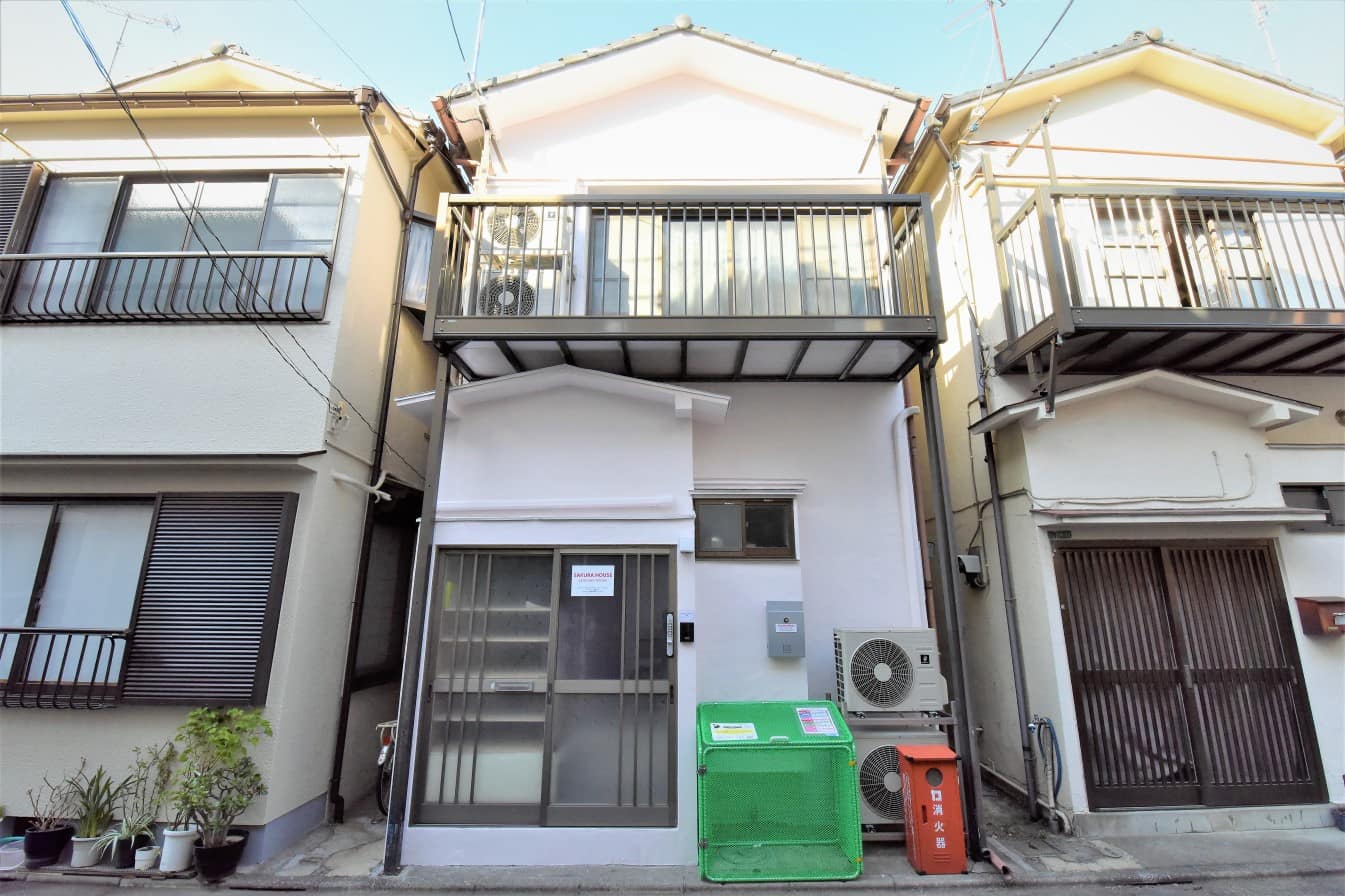
    If you’re not ready to commit to a traditional lease (or don’t want to buy furniture), furnished apartments and share houses are excellent stepping stones. Services like Sakura House, Oakhouse, and Borderless House offer furnished rooms with simple contracts, often month-to-month.

    Pros:

    • Fully furnished — just bring your suitcase
    • Simple contracts, often no guarantor needed
    • Great way to test a neighborhood before committing
    • Built-in community (especially share houses)
    • Flexible lease terms

    Cons:

    • More expensive per month than traditional apartments
    • Less privacy in share houses
    • Rules about guests and noise can be strict
    • Limited customization of your living space

    Best for: People arriving in Japan without a firm plan, digital nomads, or anyone who wants flexibility while they figure things out.

    Essential Items for Your New Japanese Apartment

    Most Japanese apartments come completely empty — and I mean completely. No light fixtures, no curtain rods, sometimes no stove. Here are the essentials you’ll want to grab right away:

    Step-by-Step Guide: How to Rent an Apartment in Japan as a Foreigner

    Step 1: Get Your Documents Ready

    Before you start apartment hunting, gather these documents:

    • Residence Card (在留カード): You must have a valid visa and residence card. Tourist visas won’t work for traditional leases.
    • Passport
    • Proof of Income: Pay stubs, employment contract, or bank statements. Generally, landlords want to see that your monthly income is at least 3x the rent.
    • Inkan (Seal) or Signature: Some contracts require a registered seal, though signatures are increasingly accepted for foreigners.
    • Emergency Contact in Japan: Ideally someone Japanese, but some guarantor companies waive this requirement.

    Step 2: Determine Your Budget

    The general rule in Japan is that rent should be no more than one-third of your monthly income. Remember to budget for the upfront costs (4-6 months’ rent) plus monthly utilities (typically ¥10,000-¥20,000 for a single person). Also factor in the annual contract renewal fee (更新料 / koushinryou), which is usually 1 month’s rent every two years.

    Step 3: Choose Your Area

    In Tokyo, for example, living in central wards like Shibuya, Shinjuku, or Minato will cost significantly more. Consider areas 15-20 minutes by train from your workplace — places like Nakano, Koenji, Kichijoji, or Kinshicho offer great livability at lower rents. Research train lines more than neighborhoods, since your commute will define your daily life.

    Step 4: Search and Contact Agents

    Use the platforms mentioned above. When you find listings you like, contact the agents. Be prepared for a response time of 1-3 business days. Have your basic information ready: nationality, visa type, employment status, desired move-in date, and budget.

    Step 5: View Properties

    Agents will typically show you 3-5 properties in a single outing. During viewings, check for:

    • Water pressure and hot water
    • Phone reception (some concrete buildings kill signals)
    • Sunlight and ventilation (critical for mold prevention)
    • Distance to nearest station and convenience store
    • Noise levels — thin walls are common
    • Garbage collection area and schedule

    Step 6: Apply and Wait

    Once you choose a property, you submit an application. The landlord and management company will review it — this is where foreigner rejection can happen. Don’t take it personally; just move on to the next option. Approval typically takes 3-7 business days. A guarantor company will also screen you during this time.

    Step 7: Sign the Contract and Pay

    The contract will likely be in Japanese. If your agent doesn’t provide an English translation or explanation, ask for one. By law, the important terms (重要事項説明 / juuyou jikō setsumei) must be explained to you before signing. Pay all upfront fees, collect your keys, and you’re in.

    Step 8: Move In and Register Your Address

    Within 14 days of moving, you must register your new address at your local ward office (区役所 / kuyakusho). This updates your residence card and is required by law. You’ll also need to set up utilities — electricity, gas (requires an in-person activation visit), water, and internet.

    Tips for Avoiding Common Pitfalls

    • Don’t lie on your application. Guarantor companies verify your information. Inconsistencies lead to instant rejection.
    • Negotiate where possible. Key money and agency fees are sometimes negotiable, especially in areas with high vacancy rates. It never hurts to ask.
    • Take photos of everything when you move in. Document every scratch, stain, and imperfection. This protects you when you move out and dispute cleaning charges.
    • Understand the renewal process. Most leases are 2 years. Renewal typically costs 1 month’s rent plus updated guarantor and insurance fees. Some people move every 2 years to avoid this.
    • Learn basic garbage rules immediately. Improper garbage disposal is one of the fastest ways to anger your neighbors and landlord. Each area has different rules and schedules.

    Frequently Asked Questions

    Can I rent an apartment in Japan without speaking Japanese?

    Yes, absolutely. In 2026, there are plenty of English-speaking real estate agents and foreigner-focused services. However, your options will be somewhat limited compared to what’s available to Japanese speakers. Having even basic Japanese will expand your choices significantly and help with day-to-day life once you move in. The contract and important documents will still be in Japanese, but good agents will walk you through everything in English.

    Can I rent an apartment in Japan on a tourist visa?

    Not a traditional apartment, no. Standard landlords and guarantor companies require a valid residence status (work visa, student visa, spouse visa, etc.). However, you can stay in furnished monthly apartments, share houses, and Airbnb-type accommodations on a tourist visa. Many people use these as temporary housing while they sort out their visa and find a permanent place.

    Why do some landlords refuse to rent to foreigners?

    This is a painful reality that has improved but hasn’t disappeared. Common concerns include language barriers, cultural differences (especially around garbage rules and noise), the possibility that a foreigner might break the lease and leave the country, and simple xenophobia. While technically

    📋
    Get the Free Moving to Japan Checklist
    Visas, banking, health insurance, apartments — the full guide for expats, delivered to your inbox.


  • Cost of Living in Japan 2026: The Real Numbers From Someone Who Actually Lives Here

    Cost of Living in Japan 2026: The Real Numbers From Someone Who Actually Lives Here

    Affiliate Disclosure: This article contains affiliate links. If you click through and make a purchase, I may earn a small commission at no extra cost to you. I only recommend products and services I personally use or have thoroughly researched. Thanks for supporting the site!

    🛡️
    Recommended for Expats
    SafetyWing — Flexible Health Insurance for Japan
    SafetyWing Nomad Insurance covers medical emergencies, hospital visits, and emergency evacuation worldwide — including Japan. Subscribe monthly and pause any time you’re back home. No long-term commitment required.

    Get a Quote →From ~$45/month · Pause when home · Used by 250,000+ nomads

    💸
    Recommended Tool
    Wise — The Expat Standard for Money Transfers
    Wise uses the real mid-market exchange rate with low, transparent fees. Most expats in Japan use it for sending money home or paying bills. No hidden markups, no surprises.

    Open a Wise Account →Free to open · No monthly fees · Used by 16M+ people

    Introduction: What Does It Really Cost to Live in Japan in 2026?

    If I had a 500-yen coin for every time someone asked me “Is Japan expensive?” — well, I’d probably have enough to cover a month’s groceries in Tokyo. The answer, as with most things in life, is: it depends.

    I’ve been living in Japan for over a decade now, and I’ve watched the cost of living shift dramatically. The weak yen that made Japan a bargain for tourists in 2023-2024 has partially corrected, inflation has nudged prices up across the board, and the government’s push for higher wages has started to actually materialize. But here’s the thing — Japan in 2026 remains remarkably livable compared to other major developed nations, especially if you know where to put your money and where to save.

    This isn’t some generic cost-of-living calculator regurgitation. I’m going to walk you through actual numbers based on real expenses — mine, my friends’, and the broader expat community’s experience. Whether you’re planning a move or already here trying to budget better, this guide has you covered.

    Before we dive in, if you’re still in the planning stages, make sure to check out our comprehensive moving to Japan checklist so you don’t miss any crucial steps.

    Quick Cost Comparison: Japan vs. Other Popular Expat Destinations in 2026

    Let’s put Japan in context. Here’s how monthly costs for a single person compare across popular expat destinations in 2026 (excluding rent):

    Category Tokyo, Japan Seoul, South Korea London, UK New York, USA Bangkok, Thailand
    Rent (1BR, City Center) ¥120,000 (~$830) ~$870 ~$2,200 ~$3,400 ~$550
    Groceries ¥45,000 (~$310) ~$330 ~$400 ~$500 ~$200
    Transportation ¥10,000 (~$70) ~$60 ~$200 ~$130 ~$50
    Dining Out (per meal) ¥800-1,200 (~$6-8) ~$7-10 ~$18-25 ~$20-30 ~$3-5
    Health Insurance ¥20,000 (~$140) ~$110 Free (NHS) ~$400+ ~$50

    Key takeaway: Tokyo is dramatically cheaper than London or New York, slightly cheaper than Seoul for most categories, and more expensive than Bangkok — but with significantly better infrastructure, safety, and public services. The value proposition in Japan remains excellent in 2026.

    Note: All yen-to-dollar conversions in this article use an approximate rate of ¥145 = $1 USD, which reflects the early 2026 exchange rate. Currency fluctuates, so always check current rates using a service like Wise before making financial decisions.

    Housing and Rent: Your Biggest Monthly Expense

    Let’s start with the elephant in the room — or rather, the surprisingly compact apartment in the room. Housing will eat up the largest chunk of your budget, but it varies wildly depending on where you live.

    Tokyo Rent in 2026

    • 1K/1DK apartment (single person, 23 wards): ¥80,000–¥130,000/month ($550–$900)
    • 1LDK apartment (couple, 23 wards): ¥120,000–¥200,000/month ($830–$1,380)
    • 2LDK/3LDK (family, 23 wards): ¥180,000–¥350,000/month ($1,240–$2,410)

    Popular expat neighborhoods like Meguro, Setagaya, and Minato-ku sit at the higher end. Budget-friendlier areas like Nerima, Adachi, and Edogawa can save you 20-30%.

    Osaka, Nagoya, and Fukuoka Rent in 2026

    • Osaka (1LDK, central): ¥80,000–¥140,000/month ($550–$965)
    • Nagoya (1LDK, central): ¥65,000–¥110,000/month ($450–$760)
    • Fukuoka (1LDK, central): ¥60,000–¥100,000/month ($415–$690)

    The hidden cost nobody warns you about: Move-in costs in Japan are brutal. Expect to pay key money (reikin), deposit (shikikin), agent fees, guarantor company fees, and first month’s rent — totaling 4-6 months’ rent upfront. Yes, seriously. Budget ¥400,000–¥700,000 just to get into a typical Tokyo apartment.

    Pros of Japanese Housing

    • Extremely safe neighborhoods across the board
    • Many apartments include air conditioning units
    • Rent has remained relatively stable despite inflation
    • No tipping culture extends to maintenance — landlords handle repairs

    Cons of Japanese Housing

    • Apartments are significantly smaller than Western equivalents
    • Move-in costs are painfully high
    • Some landlords still hesitate to rent to foreigners
    • Thin walls are common in older buildings

    Food and Groceries: Eating Well Without Breaking the Bank

    This is where Japan genuinely shines. You can eat incredibly well here on a modest budget — or blow through cash at high-end restaurants. The choice is yours.

    Monthly Grocery Budget in 2026

    • Single person (cooking at home mostly): ¥30,000–¥50,000/month ($207–$345)
    • Couple: ¥50,000–¥80,000/month ($345–$550)
    • Family of four: ¥80,000–¥120,000/month ($550–$830)

    Supermarkets like Gyomu Super, OK Store, and Hanamasa are your best friends. Pro tip from a seasoned expat: hit any supermarket after 7-8 PM for those beautiful 20-50% discount stickers on bento, sushi, and prepared foods.

    Dining Out in 2026

    • Gyudon (beef bowl) chain: ¥500–¥700 ($3.50–$4.80)
    • Ramen shop: ¥900–¥1,200 ($6.20–$8.30)
    • Conveyor belt sushi: ¥1,000–¥2,000 ($6.90–$13.80)
    • Izakaya (casual dinner with drinks): ¥2,500–¥4,000 ($17.20–$27.60)
    • Nice restaurant dinner: ¥5,000–¥15,000+ ($34.50–$103+)

    Convenience store food in Japan is legitimately good. A ¥500 konbini lunch of onigiri, a side, and a drink is nutritious and satisfying. I still eat konbini meals several times a week after all these years, and I’m not ashamed of it.

    If you’re cooking at home regularly and want to make it easier, a quality rice cooker is essential. Japanese rice cookers are next-level compared to what you’d find back home:

    Browse Zojirushi rice cookers on Amazon →

    Transportation: Japan’s Greatest Bargain

    Public transportation in Japan is so good that owning a car in a major city is genuinely unnecessary — and actually a financial burden.

    Monthly Transportation Costs in 2026

    • Train/subway commuter pass (Tokyo, average distance): ¥8,000–¥15,000/month ($55–$103)
    • Bus pass: ¥5,000–¥10,000/month ($34.50–$69)
    • Bicycle (one-time purchase): ¥15,000–¥40,000 ($103–$276)
    • Car ownership (loan, insurance, parking, gas, shaken inspection): ¥50,000–¥80,000/month ($345–$550) — avoid this in cities if you can

    Many employers cover your commuter pass entirely (tsuukin teate), so your actual out-of-pocket transportation cost could be close to zero. This is standard practice in Japan, not a perk.

    Healthcare: Surprisingly Affordable

    Japan’s national health insurance (NHI) system is one of the best in the world, and in 2026, it continues to deliver exceptional value.

    • National Health Insurance premiums: ¥15,000–¥40,000/month ($103–$276) depending on income and municipality
    • Employee health insurance (Shakai Hoken): Split with your employer, roughly ¥15,000–¥30,000 from your paycheck
    • Doctor visit copay: 30% of total cost (typically ¥1,000–¥3,000 per visit)
    • Prescription medication: Very affordable; common medications cost ¥500–¥2,000

    I had a full MRI scan last year for about ¥6,000 out of pocket ($41). My American friends literally couldn’t believe it. The quality of care is excellent, though navigating it in Japanese can be challenging. Having a basic language foundation helps enormously — consider checking out the best language apps for Japanese to start building those skills.

    Utilities and Internet: The Monthly Essentials

    Typical Monthly Utility Costs in 2026 (Single/Couple Apartment)

    • Electricity: ¥6,000–¥15,000 ($41–$103) — spikes in summer (AC) and winter (heating)
    • Gas: ¥3,000–¥6,000 ($21–$41)
    • Water: ¥2,000–¥4,000 ($14–$28) — billed every two months in most areas
    • Internet (fiber): ¥4,000–¥6,000 ($28–$41)
    • Mobile phone: ¥1,000–¥5,000 ($7–$34)

    Japan’s mobile phone market has become incredibly competitive. Budget carriers like Ahamo, LINEMO, Povo, and various MVNOs offer plans from as low as ¥1,000/month. Check our Japan SIM card guide for the best options when you first arrive.

    Electricity prices have stabilized somewhat in 2026 compared to the post-Ukraine spike, but summer months with air conditioning can still sting. A good portable fan or energy-efficient cooling solution helps:

    Shop portable air circulator fans on Amazon →

    Entertainment, Social Life, and Lifestyle Costs

    • Gym membership: ¥7,000–¥12,000/month ($48–$83) — Anytime Fitness and JOYFIT are popular chains
    • Movie ticket: ¥1,900 ($13) — watch for discount days (Ladies’ Day, First Day of the month)
    • Streaming services (Netflix/Spotify): ¥1,000–¥2,000/month ($7–$14)
    • Coffee at a chain: ¥350–¥550 ($2.40–$3.80)
    • Beer at a convenience store: ¥200–¥300 ($1.40–$2.07)
    • Karaoke (per hour): ¥300–¥600 ($2.07–$4.14)
    • Onsen/sento visit: ¥500–¥2,500 ($3.45–$17.24)

    One thing I love about Japan is that many of the best experiences are cheap or free. Hiking, temple visits, neighborhood festivals, cherry blossom viewing, cycling along rivers — you can have an incredible lifestyle without spending much on entertainment.

    Complete Monthly Budget Breakdown for 2026

    Here are three realistic monthly budgets for a single person living in Tokyo:

    Budget Lifestyle: ~¥180,000/month ($1,240)

    • Rent (shared house or outer ward 1K): ¥65,000
    • Groceries & dining: ¥35,000
    • Transportation: ¥10,000
    • Utilities & phone: ¥15,000
    • Health insurance: ¥15,000
    • Entertainment & misc: ¥15,000
    • Savings buffer: ¥25,000

    Comfortable Lifestyle: ~¥280,000/month ($1,930)

    • Rent (1LDK, decent area): ¥110,000
    • Groceries & dining: ¥55,000
    • Transportation: ¥12,000
    • Utilities & phone: ¥18,000
    • Health insurance: ¥20,000
    • Entertainment & social: ¥30,000
    • Savings buffer: ¥35,000

    Premium Lifestyle: ~¥450,000/month ($3,100)

    • Rent (nice 1LDK/2LDK, central Tokyo): ¥200,000
    • Groceries & dining (including nice restaurants): ¥80,000
    • Transportation: ¥15,000
    • Utilities & phone: ¥20,000
    • Health insurance: ¥30,000
    • Entertainment, travel, hobbies: ¥55,000
    • Savings/investments: ¥50,000

    Money-Saving Tips From a Long-Term Expat

    After ten years, I’ve picked up a few tricks that genuinely make a difference:

    1. Use Wise or Sony Bank for currency exchange — never use airport exchange counters or big bank wire transfers. You’ll lose thousands of yen in bad rates.
    2. Get a Suica/Pasmo card and use it everywhere — not just for trains, but convenience stores and vending machines. Track your spending easily.
    3. Shop at Gyomu Super and Costco — Gyomu Super is insanely cheap for basics. Costco Japan has Western products if you’re homesick.
    4. Apply for a credit card with points — Rakuten Card is the go-to. Free to join, 1% points on everything, and those points are usable across the Rakuten ecosystem.
    5. Use the furusato nozei (hometown tax) system — this lets you redirect some of your resident tax to other municipalities in exchange for gifts (wagyu beef, rice, fruits). It’s basically free stuff.
    6. Negotiate your move-in costs — you can often get key money waived or reduced, especially in less popular areas or during the off-season (avoid March/April).
    7. Bike everywhere you can — a used mamachari (city bike) costs ¥5,000–¥10,000 and pays for itself in a month of saved train fares.

    For managing your finances between your home country and Japan, a multi-currency account is essential:

    Get the Free Moving to Japan Checklist
    Visas, banking, health insurance, apartments — the full guide for expats, delivered to your inbox.


  • Japan Visa Types for Foreigners: The Complete 2026 Guide to Living & Working in Japan

    Japan Visa Types for Foreigners: The Complete 2026 Guide to Living & Working in Japan

    Affiliate Disclosure: This article contains affiliate links. If you click through and make a purchase, I may earn a small commission at no extra cost to you. I only recommend products and services I’ve personally used or thoroughly researched during my years living in Japan. Thanks for supporting the site!

    🛡️
    Recommended for Expats
    SafetyWing — Flexible Health Insurance for Japan
    SafetyWing Nomad Insurance covers medical emergencies, hospital visits, and emergency evacuation worldwide — including Japan. Subscribe monthly and pause any time you’re back home. No long-term commitment required.

    Get a Quote →From ~$45/month · Pause when home · Used by 250,000+ nomads

    In This Guide

    Introduction: Why Japan’s Visa System Matters More Than You Think

    When I first started looking into moving to Japan back in 2015, I remember staring at the Immigration Services Agency website thinking, “What language is this even in?” And I mean the English version. Japan’s visa system is notoriously confusing — there are over 30 different visa categories, each with its own requirements, restrictions, and quirks that can make or break your plans to live here.

    Here’s the thing most blogs won’t tell you: choosing the wrong visa type doesn’t just mean paperwork headaches. It can limit where you work, how long you stay, whether your spouse can join you, and even your path to permanent residency. I’ve seen friends get stuck on visas that didn’t match their actual goals, and unwinding that mess cost them years.

    In 2026, Japan is actively trying to attract more foreign talent. The government has introduced new visa categories, relaxed some requirements, and streamlined certain processes. But the system is still complex, and the stakes are high. So let’s break down every major visa type, who it’s for, and which one is right for your situation.

    If you’re in the early stages of planning, make sure to check out our complete moving to Japan checklist — it covers everything from visas to finding an apartment.

    Quick Comparison: Japan Visa Types at a Glance

    Visa Type Duration Can You Work? Best For Difficulty
    Tourist (Temporary Visitor) 15-90 days No Short visits, scouting trips Easy
    Working Holiday 6-12 months Yes (limited) Ages 18-30, exploring Japan Easy-Medium
    Instructor/ALT 1-5 years Yes (teaching only) English teachers Medium
    Engineer/Specialist in Humanities 1-5 years Yes Tech, business, translation Medium
    Highly Skilled Professional (HSP) 5 years Yes Senior professionals, researchers Medium-Hard
    Business Manager 1-5 years Yes (own business) Entrepreneurs Hard
    Student 1-2 years Part-time (28 hrs/week) Language/university students Medium
    Spouse/Dependent 6 months-5 years Yes (with permission) Married to Japanese national Medium
    Specified Skilled Worker 1-5 years Yes Blue-collar workers Medium
    Digital Nomad 6 months Remote work only Freelancers, remote workers Easy-Medium
    Permanent Residency Unlimited Yes Long-term residents Hard

    My recommendation? If you’re a professional under 30, start with the Working Holiday visa to test the waters. If you’re coming with a job offer in hand, the Engineer/Specialist in Humanities visa is your bread and butter. And if you’re a high earner or senior professional, the Highly Skilled Professional visa is a game-changer — it’s the fastest path to permanent residency in 2026.

    Tourist Visa (Temporary Visitor) — The Starting Point

    Let’s start with the basics. Citizens from 71 countries (including the US, UK, Canada, Australia, and most EU nations) can enter Japan visa-free for short stays of 15 to 90 days, depending on nationality. This isn’t technically a “visa” — it’s a landing permission, but everyone calls it a tourist visa.

    What you can do: Sightseeing, visiting friends, attending conferences, short business meetings, scouting apartments and neighborhoods.

    What you cannot do: Work. At all. Not even freelance work on your laptop at a café. Technically, even doing remote work for a foreign employer is a gray area (though the new Digital Nomad visa addresses this — more on that below).

    Pro tip from experience: Use a tourist visit strategically. Visit the neighborhoods you’re considering, check out local supermarkets, ride the trains during rush hour, and get a feel for daily life. It’s very different from vacation mode. Also, grab a Japan SIM card so you can navigate and research on the go.

    Pros

    • No application needed for most Western passport holders
    • Great for reconnaissance trips before committing to a move
    • 90 days is long enough to genuinely explore

    Cons

    • Absolutely no work permitted
    • Cannot open a bank account or sign a lease
    • Cannot be extended easily (you’d need to leave and re-enter)
    • Visa runs are risky — immigration will notice patterns

    Working Holiday Visa — The Best Way to Test the Waters

    If you’re between 18 and 30 (up to 25 for some countries), the Working Holiday visa is hands-down the best way to dip your toes into Japanese life. Japan has agreements with over 30 countries including Australia, Canada, the UK, France, Germany, and New Zealand. Notably, the US does not have a working holiday agreement with Japan.

    This visa lets you stay for six months to one year (depending on your country) and work to fund your travels. There’s typically a requirement that work should be secondary to your holiday activities, but in practice, many people work full-time for stretches.

    Pros

    • Relatively easy to obtain — no job offer needed
    • Freedom to work in almost any field
    • Can transition to a proper work visa if you find a sponsor
    • Great way to build Japanese language skills and network

    Cons

    • Strict age limits (usually 18-30)
    • Not available to US citizens
    • One-time use — you can only get it once per country agreement
    • Limited to 6-12 months with no guarantee of extension

    Engineer/Specialist in Humanities/International Services Visa — The Standard Work Visa

    This is the workhorse visa for most foreign professionals in Japan in 2026. It covers a massive range of white-collar jobs: software engineers, designers, translators, marketing professionals, accountants, consultants, and more. Despite its unwieldy name, this is probably the visa you’ll end up with if you get hired by a Japanese company.

    Requirements: A bachelor’s degree (in any field, though relevance helps) OR 10 years of professional experience in your field, plus a job offer from a company willing to sponsor you. Your employer handles most of the paperwork through the Certificate of Eligibility (COE) process.

    The visa duration ranges from 1 to 5 years, and renewals are straightforward as long as you’re still employed. You’re tied to the job category, not the specific employer — meaning you can change companies without changing visa types, as long as the new job falls within the same category.

    Pros

    • Most versatile and common work visa category
    • Can switch employers without changing visa status
    • Path to permanent residency after 10 years (or faster with points)
    • Spouse and children can join on dependent visas

    Cons

    • Requires a sponsoring employer — no freelancing allowed
    • Bachelor’s degree is essentially mandatory (with rare exceptions)
    • Processing takes 1-3 months for the COE
    • Tied to the specific job category (can’t switch to, say, teaching)

    Highly Skilled Professional (HSP) Visa — The Fast Track to Permanent Residency

    This is the visa I always tell ambitious professionals to aim for. Japan’s points-based Highly Skilled Professional system awards points for things like age, salary, education, Japanese language ability, and work experience. Score 70+ points and you qualify. Score 80+ and you’re on the fast track to permanent residency in just one year.

    Let me repeat that: permanent residency in one year. Compare that to the standard 10-year wait.

    There are three subcategories: academic research activities, specialized/technical activities, and business management activities. Most foreign professionals in tech, finance, or engineering will fall into the second category.

    Pros

    • Fastest path to permanent residency (1-3 years)
    • 5-year visa from the start
    • Spouse can work without restrictions
    • Can bring parents to Japan under certain conditions
    • Can hire a domestic helper

    Cons

    • Need to score 70+ points (salary of ~¥3-4 million+ usually needed)
    • Still requires employer sponsorship
    • Points calculation can be confusing
    • High earners benefit most — entry-level workers rarely qualify

    Digital Nomad Visa — Japan’s Newest Addition

    Launched in 2024 and refined heading into 2026, Japan’s Digital Nomad visa is a game-changer for remote workers. If you work for a company outside Japan or run your own online business, you can now legally stay in Japan for up to six months while working remotely.

    Requirements: Annual income of ¥10 million (roughly $68,000 USD) or more, private health insurance, and citizenship from a country with a tax treaty with Japan. You cannot work for Japanese clients or companies.

    This visa is perfect if you want an extended stay without committing to a full move. However, it’s not renewable back-to-back — you’ll need to leave Japan between stays.

    Pros

    • Legal framework for remote work in Japan — no more gray areas
    • Six months is long enough to really experience life here
    • No need for a Japanese employer
    • Tax benefits — generally not subject to Japanese income tax

    Cons

    • High income threshold (¥10 million/year)
    • Only six months — cannot be renewed consecutively
    • Cannot transition directly to a work visa
    • Need private health insurance (Japanese national insurance not available)

    If you’re considering the digital nomad route, a good VPN for Japan is essential for accessing your home country’s services and keeping your work connections secure.

    Student Visa — Learn Japanese and Build Your Future

    The student visa is an underrated entry point for people serious about living in Japan long-term. Enroll in a Japanese language school, university, or vocational school, and you get a visa that lets you stay for the duration of your studies — typically 1-2 years for language schools, and 2-4 years for universities.

    The real perk? You can work up to 28 hours per week (and full-time during school breaks). Many people use this time to build networks, improve their Japanese, and transition to a proper work visa after graduation.

    Pros

    • Great for building Japanese language skills
    • Part-time work allowed (28 hours/week)
    • Strong pathway to work visa after graduation
    • Japanese companies actively recruit from universities

    Cons

    • Tuition costs can be significant (¥700,000-¥1,500,000/year for language schools)
    • 28-hour work limit can make finances tight
    • Attendance requirements are strict — miss too many classes and risk visa revocation
    • Need to show proof of funds (typically ¥2,000,000+ in savings)

    Business Manager Visa — For Entrepreneurs

    Want to start your own business in Japan? The Business Manager visa lets you do exactly that. You’ll need to invest at least ¥5 million (about $34,000 USD) in your business or hire at least two full-time Japanese employees. You also need a physical office — not your apartment.

    This visa has gotten more accessible in recent years, with some municipalities offering special startup visas that give you six months to a year to establish your business before meeting the full requirements.

    Pros

    • Full independence — you’re your own boss
    • Can sponsor employees and family members
    • Path to permanent residency
    • Startup visa programs available in cities like Fukuoka, Kobe, and Tokyo

    Cons

    • ¥5 million investment required upfront
    • Need a real business plan and physical office
    • Initially granted for only 1 year — renewals depend on business viability
    • Japanese bureaucracy for business registration is intense

    Spouse/Dependent Visa — Following Your Partner to Japan

    If you’re married to a Japanese citizen, you qualify for a Spouse of Japanese National visa, which is one of the most flexible visa statuses available. You can work in any field without restrictions, start a business, or not work at all. It’s essentially a free pass to live and work in Japan.

    If your spouse is a foreign national living in Japan on a work visa, you’d get a Dependent visa instead, which requires permission to work and limits you to 28 hours per week initially.

    Pros

    • Spouse visa: unrestricted work permission
    • Relatively quick processing
    • Faster path to permanent residency (3 years of marriage + 1 year in Japan)

    Cons

    • Dependent visa is much more restrictive than spouse visa
    • Immigration may scrutinize the legitimacy of your marriage
    • If you divorce, you’ll need to switch to a different visa status

    Specified Skilled Worker (SSW) Visa — Blue-Collar Opportunities

    Introduced to address Japan’s labor shortages, the Specified Skilled Worker visa covers 16 industries including agriculture, construction, food service, hospitality, and manufacturing. There are two types: SSW Type 1 (up to 5 years, no family) and SSW Type 2 (renewable, family allowed).

    You’ll need to pass industry-specific skills tests and a basic Japanese language test (JLPT N4 level). This visa is particularly popular among workers from Southeast Asian countries but is open to all nationalities.

    Permanent Residency — The End Goal

    Permanent residency (PR) in Japan means no visa restrictions, no renewals, and freedom to work in any capacity. The standard path requires 10 consecutive years of residence, but shortcuts exist:

    • HSP with 80+ points: 1 year
    • HSP with 70+ points: 3 years
    • Spouse of Japanese national: 3 years of marriage + 1 year in Japan
    • Long-term contributor: Case-by-case basis

    You’ll also need to show stable income, pay taxes properly, have no criminal record, and demonstrate good conduct. Having pension payments up to date is crucial — this trips up many applicants.

    How to Choose the Right Japan Visa: A Step-by-Step Guide

    1. Define your goal: Are you exploring, studying, working, or starting a business? This immediately narrows your options.
    2. Check your eligibility: Age (for Working Holiday), education (for work visas), income (for Digital Nomad), or marital status (for spouse visa).
    3. Consider the timeline: Short-term visit? Digital Nomad or tourist visa. Long-term commitment? Work visa with a path to PR.
    4. Evaluate your Japanese ability: Higher Japanese proficiency opens more doors — it adds points for HSP, is required for SSW, and makes the Business Manager visa more practical.
    5. Plan for the future: If permanent residency is your goal, choose a visa that counts toward that timeline. Tourist and Digital Nomad visas do NOT count.
    6. Get your documents ready: Almost every visa requires: valid passport, passport photos, completed application forms, and supporting documents specific to the visa type. Start gathering these early.
    7. Consider hiring an immigration lawyer: For complex cases (Business Manager, HSP, or if you have a complicated background), the ¥100,000-300,000 investment in a gyōsei shoshi (administrative scrivener) or immigration lawyer is absolutely worth it.

    While preparing for your move, it’s worth investing in a good Japanese learning

    📋
    Get the Free Moving to Japan Checklist
    Visas, banking, health insurance, apartments — the full guide for expats, delivered to your inbox.


  • Suica Card Guide for Tourists: Everything You Need to Know in 2026

    Suica Card Guide for Tourists: Everything You Need to Know in 2026

    Affiliate Disclosure: This article contains affiliate links. If you make a purchase through these links, we may earn a small commission at no extra cost to you. This helps us keep creating helpful content for people moving to and living in Japan. We only recommend products and services we genuinely believe in.

    Introduction: Why the Suica Card Is Your Best Friend in Japan

    Let me paint you a picture. You’ve just landed at Narita Airport, you’re jetlagged, slightly overwhelmed by the signs everywhere, and you need to get on a train to your hotel. The last thing you want to do is figure out how much a ticket costs, find the right button on a ticket machine (some of which look like they were designed by NASA), and fumble with coins you’ve never used before.

    This is exactly why the Suica card exists, and it’s honestly one of the first things I tell anyone visiting Japan to sort out. After living here for over a decade, I can tell you that this little IC card is genuinely the single most convenient thing you’ll carry in your wallet during your trip.

    A Suica card is a rechargeable contactless smart card that lets you tap through train gates, pay for buses, grab a drink from a vending machine, buy lunch at a convenience store, and so much more. Think of it as a prepaid debit card specifically optimized for getting around Japan and buying small everyday things.

    In this comprehensive guide, I’ll walk you through everything — from how to get one in 2026 (it’s changed recently, so pay attention), to how to load it up, where you can use it, and the best alternatives if Suica isn’t available. Whether you’re here for a week or planning a longer stay, this is the guide I wish someone had given me when I first arrived.

    Before you even get to Japan, make sure you’ve got your finances sorted. I highly recommend reading our Wise Japan review to understand the best way to handle currency exchange without getting ripped off by airport kiosks.

    What Exactly Is a Suica Card?

    Suica (short for “Super Urban Intelligent Card” — yes, really) is an IC card issued by JR East (East Japan Railway Company). It was originally designed for the Tokyo metropolitan area’s train network, but over the years, it’s become accepted on virtually all public transportation across Japan, plus tens of thousands of shops, restaurants, and vending machines.

    Here’s what makes it so useful:

    • Tap-and-go convenience: No more buying individual tickets. Just tap your card on the reader at the gate and walk through.
    • Automatic fare calculation: The system automatically deducts the correct fare based on where you entered and exited.
    • Works almost everywhere: Trains, subways, buses, monorails, convenience stores (7-Eleven, Lawson, FamilyMart), vending machines, coin lockers, and many shops.
    • Interoperable: Suica works on PASMO, ICOCA, and other IC card networks nationwide. So yes, you can use your Suica in Osaka, Kyoto, Hiroshima, and beyond.

    Suica Card Options for Tourists in 2026

    This is where things have changed significantly, and a lot of outdated guides will steer you wrong. Let me break down your actual options right now in 2026.

    1. Welcome Suica (Physical Card — Limited Availability)

    The Welcome Suica was the go-to tourist card for years. It’s a physical card with a cherry blossom design (cute souvenir, honestly) that doesn’t require a ¥500 deposit. However, it expires 28 days after purchase.

    The catch in 2026: Due to a global semiconductor shortage that began in 2023, JR East significantly limited production of physical Suica cards. While Welcome Suica cards have been gradually returning to some locations, availability remains inconsistent. You might find them at major JR East travel service centers at airports like Narita and Haneda, but don’t bank on it.

    Pros:

    • No ¥500 deposit required
    • Nice souvenir with cherry blossom design
    • Works identically to a regular Suica

    Cons:

    • Expires after 28 days — no extensions
    • Limited availability in 2026
    • Can only be purchased at select locations
    • Remaining balance is non-refundable after expiry

    2. Mobile Suica on iPhone (Apple Wallet)

    This is my number one recommendation for tourists in 2026, and it’s what I personally use every single day. If you have an iPhone 8 or later, you can add a Suica card directly to your Apple Wallet. It’s free to set up, you can charge it with an international credit card, and it works even when your phone battery is low (there’s a small power reserve feature).

    Pros:

    • Free to set up — no deposit, no purchase required
    • Top up instantly with a credit card from your phone
    • Works with international credit cards (Visa, Mastercard, Amex)
    • No expiration date
    • Express Transit mode means you don’t even need Face ID — just tap and go
    • Can hold multiple Suica cards

    Cons:

    • Requires iPhone 8 or later (or Apple Watch Series 3+)
    • Some older international iPhone models may not support it — check before you travel
    • Your phone region may need to be set to Japan (easily changeable in settings)
    • If your phone completely dies, you lose access

    3. Mobile Suica on Android (Google Wallet)

    Google Wallet now supports Suica in 2026, though with some caveats. You’ll need an Android device with NFC (specifically FeliCa support, which not all international Android phones have). Pixel phones from the Pixel 6 onward generally work well. Samsung Galaxy phones purchased internationally can be hit or miss.

    Pros:

    • Free to set up
    • Top up with credit card
    • Convenient if it works with your device

    Cons:

    • Device compatibility is inconsistent for international Android phones
    • Setup process can be frustrating
    • May require the standalone Suica app (which is in Japanese)

    4. Regular Suica Card (Physical)

    Standard plastic Suica cards are still available at some JR East stations via ticket machines, though stock remains limited in 2026. These require a ¥500 deposit (refundable when you return the card) and can be loaded with up to ¥20,000.

    Pros:

    • No phone needed
    • Doesn’t expire (stays valid for 10 years after last use)
    • Deposit is refundable

    Cons:

    • Limited availability due to ongoing card shortages
    • Must top up at machines or convenience stores (cash only at most machines)
    • Easy to lose

    5. PASMO Passport (Alternative Physical Card for Tourists)

    PASMO is the other major IC card in the Tokyo area (run by the private railway and metro companies rather than JR). The PASMO Passport is their tourist version, and it functions identically to a Welcome Suica — accepted at all the same places. These have also been in limited supply but are sometimes available when Welcome Suica isn’t.

    My Recommendation: Which Suica Option Should You Choose?

    Let me make this simple:

    Your Situation Best Option Why
    iPhone user (iPhone 8+) Mobile Suica via Apple Wallet Easiest setup, instant top-ups, no card to lose
    Android user (Pixel 6+) Mobile Suica via Google Wallet Works great on compatible devices
    Older phone / no NFC Welcome Suica or PASMO Passport Physical card at airport if available
    Traveling with kids Physical card Kids under 12 need a child-rate IC card
    Want a souvenir Welcome Suica Cherry blossom design is worth keeping

    Bottom line: If you have an iPhone, set up Mobile Suica before you even board your flight to Japan. Seriously. You can do it from anywhere in the world, and you’ll be ready to tap through the gates the moment you land.

    How to Set Up Mobile Suica on iPhone (Step-by-Step)

    This takes about three minutes:

    1. Open the Wallet app on your iPhone.
    2. Tap the “+” button in the upper right corner.
    3. Select “Transit Card.”
    4. Choose “Suica” from the list. (If you don’t see it, change your device region to Japan under Settings → General → Language & Region.)
    5. Choose an amount to load. I recommend starting with ¥2,000–¥3,000 (roughly $13–$20 USD). You can always add more later.
    6. Pay with your credit or debit card. International Visa, Mastercard, and Amex cards work fine.
    7. Done! Your Suica is now in your Wallet and ready to use.

    Pro tip: Set Suica as your Express Transit card (it usually does this automatically). This means you can tap your phone on the reader without unlocking it or using Face ID. Just tap and walk. It’s beautiful.

    How to Load Money onto Your Suica

    Your options depend on whether you have a physical or mobile Suica:

    Mobile Suica (iPhone/Android)

    • Credit/debit card: Open Wallet, tap your Suica, hit “Add Money,” choose amount, confirm with Face ID/Touch ID. Takes seconds.
    • Apple Cash or linked bank account (if set up)

    Physical Suica Card

    • Fare adjustment machines and ticket machines at train stations (cash only at most)
    • Convenience stores: Tell the cashier “Suica ni charge onegaishimasu” (please charge my Suica) and hand them cash
    • Some newer machines accept credit cards, but don’t count on it

    Maximum balance: ¥20,000 (about $133 USD). You generally won’t need this much unless you’re doing a lot of train travel. Most single-day usage is ¥1,000–¥3,000.

    Speaking of managing your money in Japan, having the right tools makes a huge difference. Check out our guide to using Wise in Japan for the best exchange rates when you need to top up your Suica with yen.

    Where Can You Use Your Suica Card?

    The short answer: almost everywhere. Here’s a detailed breakdown:

    Transportation

    • JR trains (including JR East, JR West, JR Central, etc.)
    • Tokyo Metro and Toei Subway
    • Private railways (Tokyu, Odakyu, Keio, Hankyu, etc.)
    • Buses throughout Japan
    • Monorails (Tokyo Monorail, Yurikamome)
    • Some taxis (look for the IC card symbol)

    Shopping & Dining

    • Convenience stores: 7-Eleven, Lawson, FamilyMart, Ministop
    • Vending machines: The vast majority accept IC cards
    • Supermarkets: Aeon, Ito-Yokado, Life
    • Drugstores: Matsumoto Kiyoshi, Welcia, Sundrug
    • Restaurants and cafes: Many chains accept it (look for the IC symbol)
    • Coin lockers: At most major stations
    • Airport shops

    Where It Does NOT Work

    • Shinkansen (bullet trains): You generally need a separate ticket, though there are some exceptions with the “Suica” Shinkansen service on certain routes
    • Some rural bus lines in very remote areas
    • Some small-town train lines that haven’t adopted IC cards yet
    • International transactions — it’s Japan only

    Essential Accessories & Gear for Your Japan Trip

    While you’re getting your Suica sorted, here are a few things that will make your life much easier in Japan:

    Portable Phone Charger: Since Mobile Suica lives on your phone, keeping your phone charged is critical. Don’t get stuck at a train gate with a dead phone. A good power bank is essential travel gear.

    👉 Browse portable phone chargers on Amazon

    RFID-Blocking Card Holder: If you’re carrying a physical Suica alongside other contactless cards, an RFID-blocking sleeve prevents the wrong card from being read at the gate. Trust me, I’ve had this happen — the gate reads your credit card instead of your Suica, and it gets confusing.

    👉 Browse RFID-blocking card holders on Amazon

    Japan Travel Guidebook: Even in 2026, having a solid physical guidebook as a backup is surprisingly useful, especially when you’re in areas with spotty internet.

    👉 Browse Japan travel guides on Amazon

    You’ll also want reliable internet access throughout your trip. Don’t miss our Japan SIM card guide to stay connected everywhere you go.

    Suica vs. Japan Rail Pass: Do You Need Both?

    This is one of the most common questions I get, and the answer is: they serve different purposes, and yes, many tourists benefit from having both.

    The Japan Rail Pass (JR Pass) is a fixed-period pass (7, 14, or 21 days) that gives you unlimited rides on most JR trains, including the shinkansen. It’s designed for long-distance travel between cities.

    Suica is for everyday, short-distance transportation and purchases. It covers subways, private railways, buses, and shopping — things the JR Pass doesn’t cover.

    A typical tourist might use their JR Pass for the Tokyo → Kyoto → Hiroshima → Tokyo route, and their Suica for everything else: getting around within each city, buying snacks, using coin lockers, etc.

    Money-Saving Tips for Using Suica

    • Suica automatically calculates the cheapest fare based on your entry and exit points, so you don’t need to worry about choosing the “right” ticket.
    • Don’t overload your card. Start with ¥2,000–¥3,000 and top up as needed. Any remaining balance under ¥220 will incur a processing fee if you refund a physical card.
    • Use it for small purchases instead of breaking large bills. Japan is still quite cash-heavy, and having exact change is a luxury Suica provides.
    • Check your balance at any ticket machine, at convenience store registers, or directly in your Wallet app (for Mobile Suica).
    • If you get a fare error (insufficient balance at exit gate), don’t panic. Just go to the fare adjustment machine near the gates, insert your card, add cash, and it’ll clear the shortfall.

    Frequently Asked Questions

    Can I use Suica in Osaka, Kyoto, and other cities outside Tokyo?

    Yes! Since the IC card interoperability agreement, Suica is accepted on public transportation and at shops displaying the IC card symbol across virtually all of Japan. This includes Osaka’s subway, Kyoto’s buses, Fukuoka’s trains, and

    📋
    Get the Free Moving to Japan Checklist
    Visas, banking, health insurance, apartments — the full guide for expats, delivered to your inbox.